Please do not contact me for help applying for Status. I do not have expertise in the application process and cannot help you.
It has been my experience that many Canadians do not understand the difference between Status and membership, or why so many different terms are used to refer to native peoples. The confusion is understandable; this is a complex issue and the terms used in any given context can vary greatly. Many people agree that the term ‘Indian’ is a somewhat outdated and inappropriate descriptor and have adopted the presently more common ‘First Nations’. It can seem strange then when the term ‘Indian’ continues to be used, in particular by the government, or in media publications. The fact that ‘Indian’ is a legislative term is not often explained.
As a Métis, I find myself often answering questions about whether or not I have Status, which invariably turns into an explanation about what Status means in the Canadian context. The nice thing is, as time passes, fewer people ask me this because it does seem that the information is slowly getting out there into the Canadian consciousness.
To help that process along, I figured I’d give you the quick and dirty explanation of the different categories out there. Well…quick is subjective, I am after all notoriously long-winded.
Terms discussed:
- native
- indigenous
- Aboriginal
- Status Indian
- non-Status Indian
- Métis
- Inuit
- First Nations
- Bill C-31 Indians
- Bill C-3 Indians
- Band membership
- Treaty Indians
Context first
Obviously I want to focus specifically on the Canadian context. Since I’m trying to clarify the terms used, for this post I’m going to avoid using them interchangeably even though I tend to do this elsewhere.
When speaking generally, I will use the term native because it tends not to have any legal meaning and it’s just a term I’m used to using. When referring to specific legal definitions, I will use the legislated terms.
This discussion focuses mainly on Status, and does not delve into definitions of Inuit or Métis, nor is there much explanation about what being non-Status means. Those are also huge issues that require separate posts.
Status versus Membership
Status is a legal definition, used to refer to native peoples who are under federal jurisdiction. Federal jurisdiction over, “Indians, and Lands reserved for the Indians” was set up in our first Constitution, the Constitution Act, 1867, in section 91(24). This division of powers is not a little detail, so I’d like you to keep it mind always in these discussions.
The particular piece of federal legislation that defines Status is the Indian Act, which was created in 1876 and has been updated many times since then. Status then can be held only by those native peoples who fit the definition laid out in the Indian Act.
Membership is a much more complex issue. It can refer to a set of rules (traditional or not) created by a native community, that define who is a member of that community. It can also refer to those who are considered members of certain regional or national native organisations. It can be used in a much less formal and subjective sense, such as being part of an urban or rural native group.
Obviously these definitions will overlap at times. The most important thing to note is that having membership is not the same as having status. For example, I am a member of the Alberta Métis Nation. I am not a Status Indian.
Who is Aboriginal?
The term Aboriginal came into legal existence in 1982 when it was defined in section 35 of the Constitution Act, 1982. Section 35(2) defines Aboriginals as including “the Indian, Inuit and Métis peoples of Canada”. It is a general, catch all term that has gained legal status in Canada, and therefore is particular to the Canadian context.
The term ‘indigenous’ is another such catch all descriptor, but does not have the same national legal connotations. It is widely used internationally, however. I am linking now to the UN Declaration of the Rights of Indigenous Peoples to give you a sense of how it is used.
The Constitution Act, 1982 does not define ‘Indian’, ‘Inuit’ or ‘Métis’. The definitions have been fleshed out in legislation, in court decisions, and in policy manuals and have changed significantly over the years. Thus you will see these terms used in different ways depending on how old your sources is, or what period of time is being discussed and so on. Confused? Oh don’t worry, you’re not alone!
Being Aboriginal does not mean one has legal Status; Status is held only by Indians as defined in the Indian Act.
Status
Status Indians are persons who, under the Indian Act are registered or are entitled to be registered as Indians. All registered Indians have their names on the Indian roll, which is administered by Aboriginal Affairs and Northern Development Canada (AANDC). (I still call this Ministry INAC (Indian and Northern Affairs Canada) or DIAND (Department of Indian Affairs and Northern Development) which are both names I grew up hearing.)
Status Indians are able to access certain programs and services which are not available to other Aboriginal peoples.
Does this seem like a vague definition? It isn’t. It is incredibly detailed and confusing. The definitions have changed many times over the years. If you want to read more on this issue, this page gives a great overview of pre and post 1867 definitions as well as explaining some of the more shocking aspects of the Indian Act over time.
Bill C-31 and Status
There were various federal policies over the years that caused Status Indians to be removed from the Indian roll. Some lost Status when they earned a university degree, joined the Army or the priesthood, gained fee simple title of land, or married a non-Indian (this last one applied only to women). One minute you were legally an Indian, and the next…you weren’t.
Bill C-31 was passed in 1985 as an amendment to the Indian Act, and was intended to reinstate Status for those who had lost it. In particular the Bill was supposed to reverse sexual discrimination that had cause Indian women who married non-Indians to lose their Status while men who married non-Indian woman not only kept their Status, but also passed Status on to their non-Indian wives.
Bill C-31 added new categories to the Indian Act, defining who is a Status Indian, and who will be a Status Indian in the future. The legislation does not specifically refer to any sort of blood quantum, therefore there is no official policy that would take into account half or quarter Indian ancestry. Nonetheless, ancestry continues to be a determining factor in who is a Status Indian.
Section 6 of the Indian Act identifies two categories of Status Indians, called 6(1) and 6(2) Indians. Both categories provide full Status; there is no such thing as half Status. The categories determine whether the children of a Status Indian will have Status or not.
This might be a good time to get a coffee, because this next bit is always confusing for people.
A 6(1) Indian who marries a 6(1) or a 6(2) Indian will have 6(1) children. Everyone in this ‘equation’ is a full Status Indian themselves.

If two 6(2) Indians marry, they will have children with 6(1) Status.

A 6(1) Indian who marries anyone without Status (whether that person is Aboriginal or not) will have children who have 6(2) Status. A 6(2) Indian who marries anyone without Status (whether that person is Aboriginal or not) will have children with no legal Indian Status.
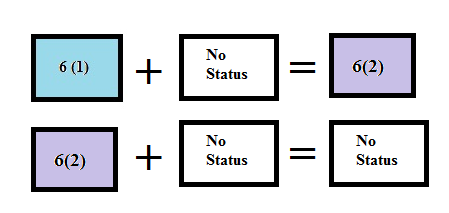
Look at this chart again. Two generations of ‘out-marriage’. That is all it takes to completely lose Status. It does not matter if you raise your grandchildren in your native culture. It does not matter if they speak your language and know your customs. If you married someone without Status, and your grandchildren have a non-Status parent, your grandchildren are not considered Indian any longer. Not legally.
To be honest, it is amazing there are any Status Indians left in this country.
Bill C-31, way to not fix sexism!
One of the most criticised aspects of Bill C-31 was that it did not actually reverse the sexism inherent in denying women Status if they married a non-Status man.
Women who had their Indian Status reinstated under Bill C-31 had 6(1) Status, but their children had 6(2) Status. That makes sense according to the charts above, right?
The problem is that men who married non-Indian women actually passed on Indian Status to their previously non-Status wives. Thus the children of those unions have 6(1) status.
Sharon McIvor, and Bill C-3: Gender Equity in Indian Registration Act
Sharon McIvor launched an epic court battle to address the problems with Bill C-31 and the Indian Act. In response a Bill was introduced to Parliament for First Reading in March of 2010. The full title of this Bill is:
An Act to promote gender equity in Indian registration by responding to the Court of Appeal for British Columbia decision in McIvor v. Canada (Registrar of Indian and Northern Affairs)
Bill C-3 was given Royal Assent on December 15, 2010 and came into force (became law) on January 31, 2011. A great many grandchildren of women who regained Status under Bill C-31 (but who passed on only 6(2) Status to their children) can now regain their 6(2) Status if they choose to.
In an unsurprising twist, this means my mother and her siblings are eligible for 6(2) Status. Many people are being faced with the same situation, and it is not an easy choice to make. Identity politics are incredibly convoluted and mined with danger. For others who have ‘lived’ Indian their whole lives, Status be damned, it can be an important change…but ultimately one that reinforces the so-called legitimacy of a colonial power deciding who is Indian and who is not.
By the way, ‘Bill C-3 Indians’ isn’t very catchy…I wonder if we’re going to start calling them ‘McIvor Indians’? (Say it out loud 😀 )
Band Membership
There are a number of sub-categories that apply to Status Indians. One category is Band membership.
A Band is defined as a group of Indians for whom land has been set aside (a Reserve), or who have been declared a Band by the Governor General (no Reserve). A Band might have a number of reserves, but can also have no land reserved at all. Think of a Band as the people themselves.
Before Bill C-31, having Indian Status automatically gave you Band membership. Bill C-31 gave Bands the ability to stay under the Indian Act Band membership rules (automatic membership with Status) or make their own rules regarding membership.
Thus you can have Status Indians who have no Band membership, just as you can have non-Status Indians who do have Band membership. Being a Status Indian is no longer a guarantee that you will be a member of a Band.
Bill C-3 Indians face the same problems as Bill C-31 Indians did. Having Status does not necessarily mean they will be able to live on reserve or get Band Membership. The pros and cons of this are hotly debated, so I’m going to back away slowly and not touch that, except to point out that there were and are no plans to make federal funding responsive to the influx of those with newly acquired Status under either Bill.
Reserves
Related to Band membership, another sub-category is between reserve and non-reserve Indians. This does not refer to whether one actually lives on the reserve or not, but rather describes whether an Indian is affiliated with a reserve. These are people who have access to a reserve and the right to live there if they choose.
Even though no historical Treaties were signed in British Columbia, there are many reserves, while in the Northwest Territories which is covered by a numbered Treaty, there is only one reserve (Hay River), and a number of communities called “settlements”. I also pointed out above that you can have membership in a Band that doesn’t have a reserve at all.
As in other situations, being a Status Indian does not guarantee you access to a reserve, and there are non-Status people who live on reserve as well.
Treaty Indians
Another sub-category you should know about has to do with whether or not someone is a Treaty Indian.
Treaties in this context refer to formal agreements between legal Indians or their ancestors and the Federal government, usually involving land surrenders. The so called ‘numbered Treaties’ were signed between 1875 and 1921 and cover most of western and northern Canada. British Columbia, with the exception of Vancouver Island is not covered by any historical Treaty.
Other Treaties were signed in eastern Canada, but there are vast areas in the east that are still not covered by any Treaty. A number of modern (since 1976) Treaties have been signed in BC, and in other areas of the country, and negotiations are still underway to create more Treaties. Some Treaties provided for reserves and others did not.
There are many non-Status Indians, particularly in eastern Canada, who consider themselves Treaty Indians. In the Prairies, “Treaty Indian” is often used interchangeably with “Status Indian” although one is not always the same as the other.
Confused yet?
To sum up, Status is held only by Indians who are defined as such under the Indian Act. Inuit and Métis do not have Status, nor do non-Status Indians. There are many categories of Status Indians, but these are legal terms only, and tell us what specific rights a native person has under the legislation.
If a native person is not a Status Indian, this does not mean that he or she is not legally Aboriginal. More importantly, not having Status does not mean someone is not native. Native peoples will continue to exist and flourish whether or not we are recognised legally and you can bet on the fact that terms and definitions will continue to evolve.

453 Comments
Arlene · December 14, 2011 at 12:07 pm
You are not long-winded; you are a teacher—a great one and I thank you for your efforts.
Mike · January 11, 2013 at 4:44 pm
One of my adopted sons (he is an adult now born in 1983) has aboriginal ancestry on his birth father’s side. I am trying to help him get more information. The problem is that we know very little about his birth father other than the fact that he had aboriginal background. I would be very grateful for some suggestions as to who to contact etc. Thanks.
cheryl stuart · August 19, 2013 at 9:54 pm
my son is also adopted and turns 18 this year…his mom had treaty status and therefore he was able to get it….so confused tho as to Band Membership altho the particular band is planning on changing their membership to allow anyone whose mother or father was a member to become a member…..thank you for the above information…about how the process workers…still confused but I can at least make some senseof itnow
RéJane ApalAlways · February 17, 2014 at 1:38 am
My son was also adopted (when he was only 7) but his adopted mother works for Service Ontario & changed his birth records. When he came back home, INAC would not allow me to put him back on the list under me, even though I am a full status first nations band member because I can no longer get access to his birth certificate.
cheryls48 · February 17, 2014 at 11:55 am
since I last posted my son has turned 18 and we have been thru hassle after hassle to gain his full status card; as adopted children get what they call a blind number…His Band has accepted him but until he gets the actual status number with Band # in front of it he does not qualify for distribution $$ or Band designation. Band has now been very accepting but INAC is ridiculous to work with. I have determined that adopted children certainly have a different road to travel and plan to pursue it furhter through a number of means. I will keep you posted. If you son was given a blind status number like my son it may be possible to get his full status..its just complicated
Bradley · February 17, 2014 at 10:40 pm
You should be able to get adoption records as the law have changed on that about 10years ago and all records are opened. CAS might be a good place to start or your member of parliment.
SM Pictou · August 24, 2014 at 8:01 pm
In order to get his original birth certificate, you would have to apply to the courts (supreme if I remember right) and provide adequate reason for the request to have access to it.
Sarena · June 7, 2015 at 10:17 pm
I am adopted and I have been trying to figure all this out since I was 15, I am now 33 and am no closer to obtaining membership. I can’t even get anyone to talk to me from the Canadian govt. As soon as I tell them that I am a US Citizen and adopted in the states they want nothing to do with me. Any recommendations on who I could talk to?
Cheryl Lundy Stuart · June 8, 2015 at 10:12 am
One of the major problems with INAC or whatever they’re called now is that the adoption unit is only a part time unit….I experienced the same problem …took me almost 16 years – start to finish – to have my adopted son obtain his status and then membership in his band. Google Aboriginal Affairs and Northern Development Canada…on that page you will find there is a link to the forms to make an application….it took over 18 months to actually hear back from them the first time….good luck..but be patient…
C. · August 13, 2015 at 10:34 am
For Albertans of adopted children: scroll down to the section on Treaty Status… http://humanservices.alberta.ca/adoption/15578.html
Joe · December 5, 2016 at 8:06 pm
What ever u do is do not talk to Indian affiars they will probably say he’s white and that’s that
Naughtya D · July 13, 2023 at 2:19 pm
I was adopted and cas gave my adopting parents a number to keep until I was of age.Once older,I called Indian affairs with my number as I had no information on birth parents,they did all the background work for me and turns out I’m 6(1) status Indian,band member and treat also.They are very helpful to say the least!
Glenn Coombs · August 23, 2014 at 12:20 pm
Tell him not to worry about finding out if he is status or not and get on with his life as a equal tax paying citizen like we all should be no handouts that doesnt work in any country in the world
âpihtawikosisân · August 23, 2014 at 4:52 pm
Generally people who define themselves as ‘tax paying citizen’ are about to say something incredibly ignorant and steeped in prejudice. So glad you didn’t break the mold on that one!
W. T. Vaughan · August 24, 2014 at 12:02 am
When you say that Glen Coombs “did not break the mold” do I understand you correctly that you believe what he said about handouts (as opposed to the rather cliched hand-ups) is incredibly ignorant and steeped in prejudice? If so, then I would heartily disagree with you.
I believe that evidence is very strong in countries like Britain that on-going welfare payments to the non-working classes is a death knell for them ever getting out of their poverty cycles, and is probably the root cause of their continued poverty both financially and in spirit.
I hope I am wrong in my understanding of what you meant.
âpihtawikosisân · August 24, 2014 at 10:10 am
The assumption that Status is linked to being on welfare is the ignorant and prejudiced attitude I am referring to. It is a pernicious and racist stereotype that Indigenous peoples are all about ‘handouts’ and in the repetition of this, Glen Coombs perpetuates a well-loved Canadian trope.
Glen offers a false dichotomy: be “Indian” or be someone who contributes to society. The assumption here is that obviously, one cannot do both.
Kim Weaver · August 23, 2014 at 5:20 pm
It took me 62 years ti find out my French/Black Irish grandmother was really Mohawk. I just thought grandma was short and dark and made really tough roast beef.
Since finding out my heritage I have embraced my Kanyen’keha:ka culture. I understand the horrific struggles my people went through. I am also proud, very proud of my culture and language. I am ashamed and working through the issues of being born and raised white and the privilege that went with that status, I have found there is very little to be proud of in my years as a tax paying citizen of Canada. Greed, social status, the yachts, the fast cars, bettering the neighbours, an making the poor and disadvantaged invisible are not very honourable traits.
The outright theft of Indigenous land and the deplorable lack of honouring of the Treaties, the IRS, the 60’s scoop and the Indigenous Termination Plan of today are not honourable as well. I will walk my path as Haudenosaunee with pride and remember the lessons of being a tax paying Canadian.
Brenda · March 16, 2016 at 3:03 pm
May I please ask how you were able to find your information out? My husband is in the same predicament with his father & grandmother with whom he honestly believes is Mohawk. He even remembers canoes coming in the water when he was younger to visit her.
Dee. Branham · September 3, 2014 at 10:38 am
If you are not a native Canadian please go back to your country of origin, or your parent’s origin. My ancestors paid dearly and taxes saved are a mere pittance.
K · October 17, 2014 at 3:36 pm
everyone’s ancestors payed from every nationality…Maybe you should find a time capsule, travel back in time about 2 millions years and complain to them! Your living in the past, most likely not a happy person so get over it! Times have changed..My grandaughter is native, I’m 100% Italian so that’s makes her what in your eyes???? Should I send her to Italy or Canada?????Which would make you happy????
âpihtawikosisân · October 18, 2014 at 3:03 pm
Times have not changed. Colonialism is ongoing, and Canadians have not payed a fraction of the worth of the land and resources they have accessed to make Canada a wealthy nation.
hedger · January 5, 2020 at 9:42 pm
All aboriginals are North Americans. Their ancestors existed before trespassers drew lines to suit themselves.
Jeff Guarino · September 16, 2023 at 9:41 am
I was born in Canada and my father was born in Canada. My grandmother was born in Canada. All of my ancestors further back in the 1800’s came from Europe. Everyone in Canada has ancestors that came from other countries including the aboriginals. Aboriginals came from Siberia. My daughter has a boyfriend who is aboriginal and she holds an Italian passport. If they move to Italy and get married, then the Italians will grant him Italian citizenship and welcome him. So If Europeans had never come to North America then the Aboriginals would have formed a government and allowed immigration and then Europeans would have immigrated and we would have exactly the same mix of people that we have today. So why do aboriginal descendants think they are some special people in the world and own a whole two continents and want to keep it all for themselves ? Almost every region of the world allows immigration except for North Korea and a few other small countries. The attitude to me smells of greediness. In Europe my ancestors died in wars and famine and suffered. Everywhere you look on earth people have ancestors that suffered. I can’t go to Russia and bitch to Putin that I should get a million dollars for the suffering of my ancestors. I I can’t go to Sicily and bitch that my ancestors died young in the sulfur mines. That is the situation we have.
âpihtawikosisân · September 19, 2023 at 2:26 pm
What exactly is accomplished by claiming that “we are all immigrants”? This is a common tactic to undermine long Indigenous priority by equating settler colonials to Indigenous Peoples. Your European ancestors came here as part of a project of colonization that was funded and fueled by the transatlantic slave trade – regardless of your ancestors’ degree of personal benefit from that unparalleled and centuries-long travesty – and your settlement was made possible only through the theft of those Indigenous bodies from Africa, and the Indigenous lands and resources in the Americas. This is not in any way comparable to whatever possible migrations occurred tens of thousands of years before.
You are confusing “Indigenous” with “endemic.” Endemic means “naturally occurring in a particular place” and only found there, while Indigenous means “originating or naturally occurring in a particular place.” Indigenous Peoples are the first inhabitants of a place. We did not originate in Siberia – our cultures are specifically rooted in and shaped by these lands, not the lands in Siberia or anywhere else. We are Peoples with thousands of years of political, social, and legal systems, and no amount of semantic quibbling can undo this.
If an Indigenous person expresses a well-founded frustration with the current state of ongoing colonialism and suggests folks leave these lands, it does you absolutely no harm. Yet here you are, flailing away with why even suggesting such a thing is “greedy” and equating the struggles of your ancestors with the ongoing plight of Indigenous Peoples who continue to suffer under white supremacist settler colonialism – rather than sitting with your own discomfort and honouring the legitimate feelings that some Indigenous folks are going to have. You are in no danger, so why speak at all? Because your conscience has been pricked, and you need to soothe it.
Maybe stop and ask yourself why you’re doing this, and what promoting overt colonizer myths to justify your continued presence actually accomplishes.
walks with claws · February 15, 2015 at 4:14 pm
If u don’t like it glen leave canada… Treaties were meant so you could live in our land
Gavin Benteau · October 29, 2017 at 9:11 am
Do we truly believe that by being ignorant and rude we will educate others about being ignorant? I did not find his comment ignorant in fact, I found his comment to be true. I did not find it equated Indian status with welfare at all it simply stated that we all should be equal tax paying citizens. The death knoll on our peoples has been the handouts and on all people the death knoll is proven to be welfare over and over.
âpihtawikosisân · October 31, 2017 at 9:56 am
You’re welcome to believe in stereotypes about yourself and other Indigenous ppl. You’re welcome to believe that it’s not racist, or rude, to spew these stereotypes all over the place. But just as I don’t speak for every Indigenous person, neither do you…and frankly, you’re outnumbered by a huge margin.
Mark · December 4, 2015 at 9:44 pm
Glen, you should educate yourself first before making idiotic comments. Being status has nothing to do with your so called “handouts”. It is about heritage and the history of this country. Accept the fact that we will not just disappear into the masses…
Nioma · October 3, 2017 at 6:21 pm
Well said. I myself am M’kmaq and proud.
klaus · February 13, 2016 at 9:46 pm
Glenn you don’t know anything about these issues and your comments show that you are a racist!
Gavin Benteau · October 29, 2017 at 9:19 am
Actually your comment shows you to be ignorant and racist.
His comment is truth in my experience. The only ones screaming for separation based on how much Native blood we have is us.
Even the mod of this page says she is passionate about education but as soon as a differing opinion shows itself she immediately attacks the person rather than educating them. The bias is seen in that choice to attack rather than debate or educate.
It is no wonder others have such a ignorant opinion of us as a people when we are online giving this behaviour.
I have no doubt I will come online in a couple weeks and see replies to my comments claiming I am not Native enough to have an opinion on Native matters. If you are going to talk racism then you first have to recognise your own racism
âpihtawikosisân · October 31, 2017 at 9:56 am
I’m passionate about education. I’m not passionate about people who debate my humanity and the humanity of other Indigenous peoples. I’m not passionate about being a punching bag for racists and self-hating Natives. Bye.
Nicole Lachapelle · May 17, 2016 at 1:45 am
You’re a jerk.
Karagh Mc Kain · April 25, 2019 at 2:47 am
That’s rich…. REALLY rich…. they ARE NOT HANDOUTS…. It’s LEGALLY earned money’s from WHITE OWNED BUSINESSES taking from First Nation Land…. Those businesses PAY INAC the fee’s they promised the band in exchange for the on reserve business…. They SHOULD be paying the band directly…. as ANY other business owner would…. but NATIVES ON RESERVE are NOT ALLOWED to control their finances…. INAC DOES…. yup you heard that right…. INAC decides how much money you receive AND how you will spend it….. SOOOO….. In fact…. the monies first nations receive…. is usually PAYMENT FOR ROYALTIES…. and NONE…. LET ME REITERATE THAT….. NONE….. of the money we receive is from TAX PAYERS…. NOT 1 FUCKIN’ RED CENT…… How would YOU feel if YOUR business or family finances required GOVERNMENT APPROVAL…. BEFORE you could do anything…. or what if your plumbing broke down…. normally…. you go to your account…. if you don’t have enough…. you spend some time…. EARNING the monies you need…. THEN…. you just go and call a plumber…. If plumbing breaks in a house on the reserve…. its different…. FIRST…. the government OWNS ALL residences on reserve….. EVEN if you get a plot given to you by the band….. the house on it…. is NOT your home officially…. you simply LIVE in it…. and IF…. you have a job and the money to BUILD YOUR OWN HOME….. If you do…. the HOME…. STILL isn’t yours…. because you built it on government owned first nation land…. the house is AUTOMATICALLY property of INAC…. or the government held entity to control first nations….. Can you imagine if the government just decided to TAKE your home…. even though you paid for it??? or decided that YOU can’t leave your residence to whomever YOU choose after you die???…. SECOND…. If you take it upon yourself to JUST FIX the plumbing and everything else that’s busted in the home…. you run the risk of fixing it….. just for the band to RE-ISSUE that house…. to someone else…. (odds are… you ain’t gonna put 10 grand into a home that can just be whisked away from under your nose) so…. you pay for the fixes that the government is TECHNICALLY responsible for and then you get the boot…. THREE…. MOST first nations don’t even have clean water to drink OR bathe in….. Cold Lake First Nations…. BORDERS the Cold Lake Weapons range….. they train the BEST of the BEST in the most technically advanced air machines in the WORLD…. They also border some of the fanciest and most expensive homes in the area…. the ones on the waterfront…. and for some reason…. they ARE NOT HOOKED UP to water treatment center for Cold Lake…. ALL areas around them are WHITE OWNED… and they ALL have access to treated clean water…. but NOT the reserve…. My mother is in her 60’s and has NEVER had CLEAN POTABLE WATER THAT COMES FROM THE TAP…..EVER…. except when she visits my sister or me…. both off reserve…. LEARN THE TRUTH DUDE…. it doesn’t take much…. I bet you will tell me I’m lying and trying to get MORE freebies…. sorry dude… I’m OFF RESERVE and in the 25 yrs I’ve been paying taxes I’ve paid FAR more than the average WHITE JOE…. IN FACT…. I pay in taxes roughly DOUBLE what the average white turd even makes in a year….. so…. SHUT IT K…. unless you are paying 100g in taxes yearly…. THEN…. you are TOO POOR…. to even GET an opinion on the matter…..
Danielle · January 25, 2015 at 4:54 am
I am in the same situation, born in PEI july 2, 1977. My birth Father may have possible status, only I’m not sure he is on my birth certificate. Will find out soon. Who can I contact in Canada for these issues? any ideas?
Theresa adoption search pei · February 28, 2015 at 10:42 am
Danielle have you found your birth family ?
Missy · November 26, 2021 at 8:43 pm
INAC Or whatever they go by now. Indigenous affairs or aboriginal affairs. Or May be your local native council office might have some answers for you
Karen Chamberlain · April 14, 2022 at 11:36 pm
Get your long term Birth Certificate, then go to Social Services for your province you were adopted from and get child welfare adoption records. Go to Archives and start doing research on the names on forms. Ancestry sites might help too or any relatives. Also Metis Nations might have something. There’s Provincial and Canada Archives as well.
Bob · July 8, 2015 at 9:26 pm
If you know where he is from, send an email to the nearest band office (First Nation) and INAC (AANDC). If you have his surname will be helpful. Any question send me an email to *redacted* Good Luck
Bob
cylene · July 1, 2016 at 9:42 am
It may be hard to prove his father was native at all unless you know him. Status members must prove ancestry. Hey there’s dna quantum tests out there too. It will give you his percentage if u wanna make sure😊
Amanda brown · October 25, 2016 at 4:22 pm
Didn’t you ever find any help? I’m also trying to find out more information as my grandfather grew up on a reserve but was aastranged from my father. We cannot find any information and he has recently passed.
Ann brown · January 3, 2017 at 11:37 pm
In response to your question about where to start..I suggest you start with post adoption registry in your province..many provincial governments have changed from non identified information to identifying information..if there is enough information about the birth father you may be able to locate him or which first nation he came from if he was treaty or status. Good luck.
Rodney Elkins · November 23, 2017 at 10:14 pm
If a white man gives me cash to get fuel and tobacco from native gas bar from canada bc store to get status discount and he gets fuel in his tank and i hand him his cigaretts in his pocket is this illigal?.
âpihtawikosisân · November 24, 2017 at 11:26 am
…yes.
Lindsey Lariviere · November 28, 2017 at 2:00 pm
Father is status but because I born before 1951 I cannot be registed as all my cousins my fathers younger siblings
maggie · April 3, 2020 at 1:00 am
My ex husband was 4th generation Iroquis, I as far as I know am not native, just wondering due to the marriage does that give me native status?
Julia Jones · May 2, 2020 at 10:08 am
No. He’s you’re EX. So you are still non-native.
Patricia Chegahno · March 26, 2021 at 10:56 am
if your marriage was registered with Indian affairs(Canada) you would have been granted status at that time (prior to 1984) and that status would still be in effect. Call your Band Office and ask to speak to the registry clerk or call Indian Services Canada.
Missy · November 26, 2021 at 8:45 pm
No they haven’t had those backwards rules since before the Indian act was amended in 1985
âpihtawikosisân · November 30, 2021 at 6:13 pm
Those amendments didn’t remove status from non-Indigenous women who gained status through marriage before the amendments came into place though. Absolutely mind blowing, but there are white women out there with status as a result.
Cam · February 6, 2022 at 5:54 pm
Have you considered a genealogy dna test from ancestry? See if he has other family on there that have done the work
Lindsey Lariviere · November 29, 2018 at 1:27 pm
think something in the charts is missing the born before 1951 granchildren can never have status those after yes
Lindsey Lariviere CD · February 13, 2019 at 1:40 pm
I stand corrected I had no Idea of recent changes I called the nearest indigiouns office the lady wanted to see me made a appont ment drove there the 1st thing she said was what took yu so long INAC has been trying to connact me since 2014 she filled some paper work took 2 photos for my new secure Id oh well my father would be happy and as for living on handouts my father worked all his life \payed his taxes even when he bought things allways payed provincial tax
Debra Huron · December 14, 2011 at 2:56 pm
Your post explains a lot of things that many Canadians cannot be blamed for being unclear about.
One thing it doesn’t touch on is the question of how the term Metis is defined in this country. I call myself Metis because I have francophone and Ojibwe ancestors on my father’s side. His grandmother was Ojibwe (status). But I grew up in Ontario where there is no “historic” Metis population. I’d be interested to know your opinion of this writer’s views:
http://bit.ly/u2UXuz
He seems to be saying that people (like me) who self-identify as Metis but have no link to the historic Red River Metis of Manitoba are actually misusing the term. We’re not part of his definition of what it means to be Metis.
My dilemma is, what do I call myself if I don’t use the term Metis? I ask this more in a rhetorical sense than in the sense of needing a definitive answer. I’m comfortable in my skin and with my ancestry, and will call myself what I damn well please! 🙂 However, it’s not easy being of “mixed blood” in this country, and millions of us find ourselves in this situation.
best wishes to you, Debra
âpihtawikosisân · December 14, 2011 at 3:46 pm
I very specifically did not address the various definitions of Métis because as I explained, it’s going to require a long post all of its own!
I will say that Métis used to mean ‘mixed blood’ but has certainly become something beyond that. When people here in Quebec hear that I am Métis, they ask me which of my parents is “an Indian”. That isn’t how I define myself as Métis, but neither do I believe in Red River ‘purity’, as my community has a different history. One linked to the Red River Settlement, yes…but not defined by.
In any case, this is certainly something I will come back to:)
Will 0'hare · August 3, 2013 at 1:52 pm
Hello Debra,
I too am métis, and I too have no ancestral connection to the Red River métis. However, in my research on the subject I have discovered that I am indeed métis. The types of Metis are Anglo-Metis (non francophone European heritage) and Franco-Metis (francophone heritage). I am an anglo Metis, and legally as well as culturally, I am considered and proud to be métis. People who claim only red river métis should be included in the definition are sadly elitist in the broad, proud, and diverse culture of Metis people throughout the country, whether you have red river, French, anglophone, or any other ancestry, and whether you are from Ontario, Saskatchewan, bc, Nunavut, or any where else, if you observe the culture and are proud of it in your life, then you can proudly and truly call yourself métis!
Sincerely,
Liam C
Trudy · April 9, 2016 at 8:04 am
I found your blog and can’t stop reading it. Truly informative.
I have been researching my family tree. My family is from the Red River settlement going way back to Treaty 1. My great great grandfather who is Indian born on the St Peter’s reserve did not take treaty. He did marry an Indian women from Manigotogan who resided on the St Peter’s reserve. He took scrip. His daughter (My grandmother) was born on the reserve. My grandmother ended up marrying a Scotish man and lived in Fort Alexander, MB. My mother married a British man.
My mother has tried numerous times to get her status. She needed her mother’s birth certificate. Which we have searched, unfortunately haven’t been able to locate yet.
I have grown up as Euro metis. Is this correct?
Look forward to your reply.
Cameron Longo · August 25, 2017 at 11:15 pm
From Fort alex your mom was from?
tracy's two cents · September 1, 2013 at 2:52 pm
Hi Debra, I notice your post was from a coupla years ago, but I was compelled to respond. Like yourself (if I understood correctly), I am 1/8 aboriginal . While I was very interested to learn about my aboriginal ancestry, I have lived in the world as a white woman. I have no real connection to my great grandmother’s cultural heritage, therefore, I do not identify as aboriginal or metis, as cultural association is generally thought to be a central factor in identification as such. While it’s important to know one’s roots, I think it’s equally important to respect the cultural-historical significance of being aboriginal in this country, and the potentially oppressive/colonizing effect of appropriating the designation when one has had every benefit of membership in the dominant (white) culture. I’m really not trying to be contrary! I don’t presume that this necessarily applies to your situation…I just wanted to articulate an awareness I have gained on my own journey 🙂
travispinn · May 13, 2014 at 1:17 pm
Very well said, Tracy. As far as “cultural association”, however, doesn’t one’s culture evolve over time? Can those of us with clear indigenous ancestry, but little cultural heritage, “know these roots” without connecting with our living Indigenous cousins and visiting and learning about our great-grandmothers’ homeland? Perhaps even serving in Nation-building processes? Doesn’t a disconnection to one’s indigenous family past merely left to a family tree just feed colonial processes and narratives? By the way, I’m not suggesting that this is the case with you at all, but would be curious about your thoughts on the manner.
I agree that “cultural-historical significance of being aboriginal in this country” must be respected and there is a real threat of ill-effect when someone appropriates the designation “when one has had every benefit of membership in the dominant (white) culture.” For some, this danger often alludes them or just gets swallowed up in a crusade to escape being white.
Yet, I have found the little cultural heritage I was raised with to be the tip of a story iceberg. Almost every week, I learn more of the complexity of my large family’s journey to become or not become white and how elements of our particular indigeneity persist.
I think those mixed-bloods who may be able to pass as white and maybe shouldn’t identify as Indigenous because of current and past dominant-culture upbringing, still have a responsibility to their respective Indigenous ancestors and living Indigenous relatives. The story is never as simple as the narrative suggests; Indians don’t just become white from of a couple generations of marrying out and living away from the homeland because the stories and culture get passed on, they are stronger than that.
Sandra ellis · May 13, 2015 at 5:57 am
My grandparents both maternal and ferternal are questionable races and like most families that have been assimilated and cloked with the family secret , origins are not well known but sometimes obvious in the generations that followed…it has been difficult to uncover and reveal race due to the fact that it is linked to the women in my family…I was blessed with aboriginal grandchildren and when I look at them, I secretly feel somehow that we have come full circle. I say secretly because without the proof I do not feel I have the right to identify myself as anything more then some sort of unknown mixed races.
Clayton G · August 10, 2021 at 4:11 pm
you would have Ojibwe ancestors just because your white with Ojibwe doesn’t make you Métis Ojibwe Cree Métis Mohawk wigwam there is many types of native Indians Métis is one type so you would be considered white with Ojibwe ancestors in your background unless your status then you would be status native Ojibwa Métis is a completely different background by you telling people your Métis your actually misleading people to believe you have a background that has nothing to do with your actual background if you looked up information about Métis and information about Ojibwe people then you’d get a better understanding and if you truly wannah know about and share your ancestral background I encourage you too look up the Ojibwe people and find out what they are about and the difference between Ojibwe and Métis people you would definitely know why people think it’s wrong to misrepresent your background
Emo · December 14, 2011 at 7:05 pm
Re: “In the Prairies, “Treaty Indian” is often used interchangeably with “Status Indian” although one is not always the same as the other.”
Part of what makes the treaty system seem so surreal is that we do have bands here that refused to sign the treaties… but the government proceeds to treat them as if they had signed the treaties anyway, and it seems to make very little palpable difference. Reportedly, one of the few recognitions that Standing Buffalo F.N. never signed the treaty is that they don’t get the $5 per year that the surrounding reservations receive… but in almost every other conceivable way the government treats them as if the treaty had been signed (and, certainly, there’s no schedule for new treaty negotiations…). If you were going to ask yourself the hypothetical question “what if…?” a given band had refused to sign, or had held out for further negotiations… well, there are (very peculiar) actual examples of what happened for those who did not sign. It’s one of many historical ironies that seems almost devised to demonstrate how little difference the treaties have made for the people they were supposed to protect.
At one point I tried to make a complete list of such “unsurrendered territories” within Cree-speaking Canada… but I think I got sidetracked with memorizing actual Cree vocabulary, and the other things that take up my time.
Mark · December 14, 2011 at 10:16 pm
In Treaty 3 there is no Metis. There is a term called half breed. One would understand that if one was half Ojibway and half British, their child would neither be British or Ojibway but a half breed. But it makes no logical sense id someone’s grandparents were 3 British and one Ojibway to say the peson was Ojibway. The majority of their DNA Is non-
Ojibway and likely their culture is predominantly British, thus they should be called British.
Metis by definition are from the Red River Valley. Anyone east of Manitoba or West of Saskatchewan with native blood are half breeds or
more accurateley, non natives with a little bit of native blood in them, like me.
If non natives owe, and natives are owed, then we need to look at the geat grandparents and determine if the majority are owers or owed.
if split, then they are half breeds and can hunt and fish for free.
âpihtawikosisân · December 15, 2011 at 7:21 am
I disagree so strongly with your arbitrary geographic boundaries, that I guess I’m going to have to get to that post sooner than I thought 😀
Jessie · September 27, 2012 at 10:07 am
I also disagree. How would the Ojibwe be British when the Ojibwe were here on this land first? Also Metis as per my teachings, were those with french canadian AND aboriginal blood…. just my thoughts…
Will 0'hare · August 3, 2013 at 2:40 pm
I also disagree strongly. Metis is by definition anyone who self identifies as Metis, is accepted by a métis community, and who has ancestry of mixed native and European blood. I have a mix of Scottish and Iroquois blood, which makes me Anglo Metis, but no less a part of the culture than a person who is directly descended from Louis Riel. Strict geographic boundaries of who is métis are ridiculous and elitist, taking away so much of the diversity that makes the métis culture so wonderful. You can be from any province, have ancestors from anywhere, but as long as you are mixed native and European, and as long as you accept and promote the culture within yourself and among others, then you are métis, regardless of geography or type of ancestry, and take pride in that!
Liam C
Taylor · April 29, 2020 at 1:43 am
French Meti are french anglophones Im ancester to louis reil My family came from Urope but one Me greatgrandma But im Satus Meti Im legally meti But im indian We are called The Allien When the French came down they changed the name to meti it means mixed blood im not a half breed the french are half breeds Im Allien.
âpihtawikosisân · April 29, 2020 at 2:49 pm
You’re neither an ancestor of Louis Riel (lol) or a descendant. He had no children who lived to have children of their own. NO ONE is a descendant of Louis Riel.
trevor · July 13, 2014 at 3:58 pm
Your comment disgusts me in so many ways. First off the the way you reffered to natives as “owed”, the way you presume that metis have earned their inherent right to hunt, the way you slap a blood quantum on metis identity/culture/heritage aswell as how you unknowningly proclaim that no distinct historical metis communities exist outside the boundaries of saskatchewan and manitoba. Please do write an article on this apihtakosisan
Ps my roots are mainly fron the RR and saskatchewn but also from ontario and a metis-mohawk fur trade community in sw quebec. With so much diverse metis culture i can testify to the existence of metis people in qc and ontario who have the same or similar culture/language/genealogy… also sorry for misspellings and typos due to the fact im o my cellular!
-Proud metis
âpihtawikosisân · July 13, 2014 at 8:20 pm
I did do a piece on the Métis. You can find it on the Indigenous Issues 101 page:)
Kim Weaver · July 13, 2014 at 8:30 pm
I take extreme exception to your comments. Your discussion on blood quantum is a white colonial game used to decide who is and who is not “Indian”. I know many Metis in Treaty 3 territory. I also dislike immensely the term “Native”. It is pejorative term used by colonists too lazy to learn who they are talking to.
The business of owe and owed is again pejorative. I am self-declared Onkwehon:we and it has been accepted and confirmed by the Mohawk of the Bay of Quinte and I have acceptance as Kanienkeha:ka from other Kanienkeha communities and Elders. That counts. I happen to have “Status” and it once had meaning as a validation as I discovered my “lost” culture but I have nothing but contempt for the Canada’s game of percentage extermination.
Mark · December 14, 2011 at 10:42 pm
My best friend gowing up was an Afrikaner. When his dad retired he mentioned he had Zulu blood, like duh, but coloureds were trested different so tjey identified as Boers. In Canada, we have the same dynamic in reverse. If you can claim some native blood, at minimum you can claim Metis Staus, or, even if 7 out of 8 grandparents belong to the Royal Family, and one is Buffy St Marie, you can claim to be a status Indian.
There are no Metis in Ontario but Tony Belacourt and the OMA has brough beat the Supreme Court to agree to this non-sense.
Lets just examine it from an ower and an owee point of view. If both sides of the family are owed, then they are owed. If one side owes and the other sided is owed, then they neiter are owed or are they having to pay (ie half breed). But if 3/4 grandparents owe, an one grandparent is owed, the child should owe(ie be non native) then be owed.
The way the situation is now, in 4 generations, 25% of Canadians will pay no taxes even though their genetics make up less than 5% native blood.
If you can speak English, read and write English, can find Canada on a map, do basic math, have most of your ancestors come from outside of NA, you are not native, but non-native by definition. Unless..
we define ancestory by place of birth, not blood. In that case, anyone born on Treaty land belongs to that Treaty. This is what happens when an illegal immigrant has a baby in Canada, their child is a Canadian citizen. Most Grand Chiefs oppose rhis as they could loose an election to a white person.
Bottom line, racism sucks!
âpihtawikosisân · December 15, 2011 at 10:02 am
“The way the situation is now, in 4 generations, 25% of Canadians will pay no taxes even though their genetics make up less than 5% native blood.”
Please read this post again, and then read the First Nations taxation post in order to figure out why this claim is wholly inaccurate.
I won’t bother to deal with the rest of what you’ve said here at this point. I’ve asked you elsewhere to tone down the rhetoric and actually engage in discussion, and I hope you will do that from now on.
I would also like to point out that I am aware you are also “Ernest” and that I have asked you previously to tone it down, and that we have been able to speak calmly at times. I am going to be more strict with your posts, now that we’ve had this discussion about tone and dialogue more than twice.
Wilfred Burton · January 13, 2014 at 7:30 am
Interesting… my status friends just don’t get married so their children retain their status. LOL.
Missy · November 26, 2021 at 8:38 pm
Those rules haven’t been in affect since the Indian act was amended in 1985.
âpihtawikosisân · November 30, 2021 at 6:14 pm
Which? Because status is still very much regulated by the Indian Act.
Seb · September 16, 2014 at 10:20 am
Yet Riel himself recognizes the existence of Métis in the Eastern provinces of Canada in his 1885 letters! On top of census found in Quebec, Ontario, even the use of that etnonym in the Maritime and in early American literature! There is now an increasing amount of scholarly work showing the presence of Metis communities all over North America, especially in the MidWest and Pacific Northwest.
I guess it’s time for you to let go of these blinders about the complexity of Métis identity across North America and the deepest meaning of what culture is beyond the criteria by which you shut so arbitrarily “Métis” from peoples who would be “merely mixed”! The only “merely-mixed peoples” I know of are those who have accepted their assimilation (it’s a personal choice), and now look down at their Indigenous/Métis heritage as a simple genetical anecdote.
Awaia:gon Seneca Nation · December 15, 2011 at 1:04 am
Why is it that we as Indian people need a card to be Indians we are the only people that need a Foreign nation to say we are members of another nation….
we are still indian people i use Indian because thats what im used to hearing.
the indian act was made to screw our peoples over but yet we are forced to follow it band council are Government Employees. they swear an oath to CANADA they do not swear to up old the ways of our nations they are there to aid the Government with there programs etc.
this is CANADA and THE USA its Turtle ISLAND these are the home lands of our people where our ancestors are buried where our WAYS or life and our LANGUAGES originated.
why must we as the Indigenous peoples of this land be forced to follow the LAW, WAY, and there cultures.
we have our own laws, we have our own GOVERNMENTS.
if they actually wanna do some good scrap the Indian act, scrap there band councils and FULL ALLOW US TO REINSTATE OUR TRADITIONAL COUNCILS.
canada you need to stop enforcing things on us.
in all actuality you have NO RIGHT.
Milo · February 16, 2014 at 11:26 pm
Couldn’t agree more; I am non aboriginal, I live and work on a reserve in NWO. It has been my observation that so long as band members continue to participate in the federal and provincial Canadian government system all the societal issues on the Rez will continue to flourish. Government hand outs kill peoples motivation and spirit.
Mary Anne Ouellette · November 26, 2020 at 7:16 pm
I agree Awaia:gon, time for us to know who we are and stop the government from telling us who we are. I will not swear an Oath to Canada as this land is sacred land of our people which has been stolen from us and the government of Canada is trying to cause division with us so they can out number us. If we can all put ego aside and think about each other as brothers and sisters in the Blood we would out number them. Together we have hope but divided we lose ;(
korenle · December 15, 2011 at 2:03 am
Great post.. the confused look when I explain this to people always gets me. Who we are defined as is not based on our own ideologies, or it would be less confusing. Sometimes I answer the question what kind of Native are you with… I am a 6(1) my kids are 6(2).. my kids will have to make a decision when they grow up a choose a life partner and start having kids. Do I want my kids to have status? Do most other people have to make that decision.
Your blog is so great, it asks the questions we have in our minds and your answers are on point each time with a lil humour for good measure. Keep it up girl. I can’t wait for the Metis post. Your changing the world one blog at a time.
ladyjo · March 8, 2015 at 10:00 pm
I appreciate your comment, I am non native, married to a 6(2) who gained status through bill c-3. This has legitimized my husbands ancestry and helped him feel more connected to his mother’s culture (his culture), which she worked diligently to reconnect with after 1985. I endeavor, with my husband, to ensure our children are aware of this very special piece of who they are, and can’t help feeling remorseful that my children are not eligable for status because of my own European ancestry(UEL). We are lucky to live close to a reserve, so exposure is not an issue, just legitimacy. I am not looking forward to the day that I have to tell my children that even if they believe they are native the government has decided they are not native enough.
David Ben (@Sittingbull3) · March 10, 2015 at 3:22 am
this is the colonial mess that the Treaties got the Indigenous ppl into..and its not of their own making..they were forced, coerced and some signed the Treaties ‘under duress’ eg starvation, gun-point eg genocide..this Treaty issue will be at the centre of attention, nationally and internationally during the FIRST NORTH AMERICAN INDIGENOUS SUMMIT 2016: the Treaties…hosted by NightThunder First Nation (FNAIN, FNAIG), but as at this writing the Canadian government seems to assume, and do take it upon themselves, the right to dictate and define the Treaty/non-Treaty status-issue, designation etc re the first North American without as much as a request for a meeting, consultation (duty-to-consult) with the Indigenous First Nations..eg the Indigenous North American..
Lindsey Lariviere · November 27, 2018 at 2:19 pm
I am not native only because of a birth date I am too old to be a native all my yonger cousins are all status too bad my father was the oldest child discrimination Canada ???
Lindsey Lariviere CD · February 13, 2019 at 1:56 pm
things have changed since my post am waiting for my secure status card to arrive
Mark · December 15, 2011 at 9:32 am
Treaty 3 incliding the Lind vesion is available on the internet. No mention of Metis but the term half breed is used to give hunting and fishing rights.
I am a scientist and can not stand illogic. Again, why is someone who is less than half native not called a non-native expecially since non-natives owe natives, or so we are led to believe.
You can see that half breed is an accurate term, as they get the benifit og hunting and fishing from their one half and the responibility to pay taxes from their other half.
But if someone is majority Non-native, grew up in a non-native community, they are non native. Otherwise you are saying that ‘native’ blood is somehow more important or precious which is a form of eugenics and is total BS.
Please find any historical document over 75 years old where the term Metis is used outside of he Red River Valley area and I will shut up.
âpihtawikosisân · December 15, 2011 at 9:39 am
The Treaties do not define who is Métis. Whether or not you are a scientist has no bearing on an identity discussion, which is not a scientific investigation, but rather a socio-political one, rooted in various historical (re: subjective) debates as well as currently evolving approaches.
I do not appreciate your aggressive attitude on this. I am currently working on a post to deal with the unsettled issue of Métis identity (they’ll remain unsettled at the end of my post btw). You are welcome to participate in a discussion on what I have to say when I have finished, but I would very much appreciate if you do not come full of assumptions, accusations, and demands. You can imagine that I too feel strongly about this, but I do not present my thoughts on the matter as unquestionable fact because to do so ignores the variety of valid opinion on what is not a clear issue.
Mark · December 15, 2011 at 9:50 am
Edit:
I know the issue of identity and identification is a tricky one that gets people very fired up. I understand that you have strong feelings on the matter, and strong opinions to go with them. I respect that. However, I need to provide a balance on this blog so that people do not feel threatened or disrespected and silenced because of it.
If you can find a way to phrase yourself which does not come across as an attack, then I would very much appreciate you doing so. I will attempt to at least deal with the issue you’ve raised, but I can’t let you drive people away with the tone you’ve taken. We hear it enough elsewhere, and it really does silence the dialogue. I want to avoid that here.
Dialogue also means being willing to consider other people’s points of view…but they are unlikely to share that with you if they feel you have made up your mind and reject them before ever hearing their opinions.
I aim this not just at you, Mark, but post this as a reminder to all of us as well.
daveM · December 15, 2011 at 10:48 am
I greatly appreciate your post. For me, your posts are an education that I wish I had experienced many years ago.
I soooo thank you.
Old Jules · December 22, 2011 at 9:52 am
Reblogged this on So Far From Heaven.
Ernest · December 22, 2011 at 8:50 pm
Edit: Ernest/Mark, you are no longer welcome on this blog. You consistently attempt to inflame the conversation with insinuations and accusations. You have been asked repeatedly to engage in respectful dialogue. As you seem unwilling to do this, please refrain from posting further. I will not give you any further benefit of the doubt or approve your comments.
Emo · December 23, 2011 at 12:57 pm
BTW, and (sadly) right on topic (for conflicting definitions of “status” vs. “band membership” vs. the right of living on the reserve’s land itself, etc. etc.) for those who don’t already know the story, cf. the strange case of Waneek Horn-Miller… a story that is “old” (2010) and yet still is news…
[Headline:] Former Olympian faces eviction from reserve over non-native fiancé
[Quote:] As the band council threatens evictions of any non-natives living on the reserve with Mohawk partners, Ms. Horn-Miller is appealing for a change to a policy that is tearing families apart. “For a few generations now, people being told ‘marry out, you get out’ and being forced to leave, it hasn’t contributed to a healthier society,” she said in her first interview with outside media since she was targeted. “That is not the solution to solving our social problems and saving our language and culture.”
[…]
In April, with her new home under construction and the arrival of her first child a month away, Ms. Horn-Miller learned a petition had been submitted to the band council demanding a stop to building. About 50 people had signed the petition, complaining that Ms. Horn-Miller’s fiancé, Keith Morgan, had no right to live in the house. The contractor arrived at the work site one morning to find a note directed at Mr. Morgan telling him to leave. Days before she gave birth to her daughter, Konwaskennenhawi, Ms. Horn-Miller received an anonymous letter saying her half-Mohawk child was unwelcome on the reserve.
[The whole article:] http://www.caledoniawakeupcall.com/updates/100716np.html
If you want to see a photo of the newborn baby (and why not?) they published one in the McGill University newsletter, here: http://www.mcgill.ca/files/fph/OctoberNewsletter.pdf
Emo · March 12, 2012 at 9:53 pm
An addendum on the strange case of Waneek Horn-Miller:
Her mother (Kahn-Tineta Horn), also, was an interesting historical character, but, I note, her mother’s take on indigenous identity was also starkly opposed to intermarriage (and I have to wonder if this changed in more recent years):
“She advocated “Indian apartheid” or separate development, including preservation of the reserve system, teaching by natives only, and the banning of Indian-white intermarriage.”
SOURCE: http://www.thecanadianencyclopedia.com/articles/kahntineta-horn
Of course, that same article concludes by saying that after 1972 Kahn-Tineta was employed in a series of positions by I.N.A.C. (and that must be an interesting story unto itself)… but if anything can result in an activist toning down their “apartheid” rhetoric, it would be that.
Waneek’s current TV show, BTW = http://aptn.ca/pages/workingitouttogether/videos/full-episodes/
âpihtawikosisân · March 13, 2012 at 10:17 am
It is always disconcerting to have people you know discussed this way.
Teresa · August 12, 2012 at 11:27 am
Could you give a definition of a C-2 Indian?
âpihtawikosisân · August 12, 2012 at 2:23 pm
I haven’t heard of C-2 before, are you sure it isn’t 6(2)?
moi · August 15, 2012 at 7:07 pm
juss found brothers son 50,born 1962,adopted ,unwillingly [taken] stolen ,n d n baby,
soled to white , by catholic relief ,ny
we are band members ‘abenaki ‘ from odanak ca.
need a way to tell our story
Lois · August 16, 2012 at 1:14 pm
My grandfather was full blooded mi’kmaq, my grandmother was white. Together they had a daughter (my mother). My mother married a white man and together they had me. Am I aboriginal…?
âpihtawikosisân · August 16, 2012 at 4:18 pm
Whether or not you’re native is an issue of identity, and this article is about legal Status. If you’re asking, are you eligible for Status, then it depends. If your grandmother, as a white woman, was given Status when she married your grandfather (as happened frequently), then your mother would be a 6(1) and you would be 6(2), eligible for Status. But there are all sorts of possibilities that could make this untrue, including being adopted out and not having Status recorded (or passed), your grandmother not acquiring Status (in which case your mother would be 6(2) and you would not have Status), etc. It’s complicated.
If you’re asking whether being 1/4 native means you are native yourself…again, that’s an identity issue and is much more complicated than what the Indian Act has to say. I can’t really answer that for you.
Rosemary · September 6, 2012 at 3:43 pm
I and my siblings have applied for Status on 2 occasions and have been denied, though we are told if we have any additional or new information, they will look at our application again.
My paternal grandmother was born on reserve and then taken off reserve before she was a year old when her father took scrip.
My maternal grandfather has members of his clan who are on the band roll on reserve. His family took scrip.
I was raised as a First Nations/Metis person, my parents and grandparents spoke Michif and Saulteaux.
Indian Affairs say they find no record of my dad’s mother whom was born on reserve.
I have no doubt our family should have status returned, but where do we start?
I have a geneology showing which band our family came from and when scrip was taken etc.
I guess I am hoping that somehow my grandmother’s status could be found or returned, thereby making my dad a Status Indian.
Can you advise?
Thank you, any info from you may be helpful.
Mary
âpihtawikosisân · September 6, 2012 at 7:13 pm
I’m sorry, I can’t offer you any advice on gaining status. A lot of people struggle with lost or closed records and are unable to ‘prove’ what is obvious, unfortunately.
Conni Wolfe · October 16, 2012 at 11:03 am
My mother re-gained her Status that was taken from her (both of parents / my grandparents were Status), in turn my brothers,sister and I obtained our status. Are our children qualify for status if we marry non-status partners.
âpihtawikosisân · October 16, 2012 at 8:05 pm
It depends on whether she has 6(1) or 6(2) Status.
If your mother has 6(2) and your father is a 6(2) or 6(1) Status Indian, then this is why you’d have Status. Otherwise you’d have lost Status. I’m assuming your mom has 6(1) then.
If she has 6(1), you would have 6(1) as well if your father is 6(1) or 6(2). In that case, if you married non-Status, your children would have 6(2) Status.
If your mom has 6(1) and your father was non-Status, you would have 6(2). Then, if you married non-Status, your children would not have Status.
It can be very convoluted.
MissNita · October 20, 2012 at 8:07 pm
My maternal grandfather was 1/2 native and married my grandmother, a white woman. My grandfather did not have status, that I’m aware of. My mother recently told me that her brother [my uncle] got status, as did his daughter [my cousin]. Based on what I’ve read here that just isn’t possible…even if my grandfather was full native, he’d still have to have had status for my uncle to even be eligible for status and even then, my cousin would have no status, right? It’s very confusing.
And does a parent have to acquire status first for their child to even apply?
âpihtawikosisân · October 21, 2012 at 7:21 am
The intricacies get so confusing, so fast, that individual cases like these are really hard to untangle…hence the “sort of explained” in the title.
KIm Patrick Weaver · October 31, 2012 at 5:39 pm
Thanks for the very informative article. I am a C-3 Status Indian. I just got my SCIS on Monday after a long time waiting. There are some interesting wrinkles that have arisen with how AANDC implemented the program and their response to the volume of applications received. I am trying to connect with other C-3 applicants to help where I can from my experience in getting through the minefield of application and dealing with the two tier status system the federal government has created with the TCRD (Temporary Certificate of Registration Document).
Lindsey Lariviere CD · February 13, 2019 at 5:31 pm
Iguess I will be a C3 also am still waiting noCRD
teamster362 · November 30, 2012 at 2:01 pm
my wife and i were married 1971,she regained her status with bill c 31.i am white,would i have any rights? native men who married white women ,these women had status,while i did not;ie may wife would like to harvest deer or moose,can i hunt for her,would she have to prove she shot the deer ?any help in this area would be of help.thank you for your time
Kaihe · December 17, 2012 at 8:17 pm
Kia ora I’m am a Maori native in New Zealand/Aotearoa. Thank you for your great posts I’m always interested in learning about our Indigenous brothers and sisters. To me and many other Maori people you are not a native based on how much native blood runs through your veins, but rather what you feel in your heart and wairua (soul). I don’t care if you are 1 10th Maori if you say and truly believe you are Maori, then that is who you are. Ma te atua koutou e manaaki.
Kaihe · January 5, 2013 at 8:23 pm
Thanks for the reply
Will 0'hare · August 3, 2013 at 2:53 pm
Thank you very much for this post. I have always felt slightly conscious of the fact that I am only a fairly small percent aboriginal, but I am, nevertheless, very proud of my ancestry, and I am very active in learning about, observing, and promoting my culture as a métis. It truly does not matter what percentage your blood is, as long as you feel the pride and spirit of the culture flowing through your veins!
Diane Richter · January 4, 2013 at 6:31 pm
I have had someone tell me that even thou I myself am not status and my husband is. I should be able to be under his medical and status is this true?
âpihtawikosisân · January 4, 2013 at 7:57 pm
Not as far as I know, no.
Lori Simms-Byrne · November 3, 2014 at 4:00 am
definately not
Bill Vaughan · January 4, 2013 at 8:31 pm
Although your original blog is over a year old, I have only just read it as a result of searching the internet to find the definition of a Status Indian. Thank you for providing an excellent and clear definition.
With respect, I would like to take exception to your comment that “it is amazing that there are any status indians left”, by looking at the mathematics.
You have indicated 5 combinations for marriage and I would like to add the final possible combination of 6(1), 6(2) and no status which is [no status + no status = no status]. When you consider these six couplings there are12 parents – 4 of 6(1), 4 of 6(2) and 4 of no status, producing 6 offspring – 3 of 6(1), 1 of 6(2) and 2 of no status.
Assuming a 6(2) is someone with 50% 6(1) genes and 50% no status genes the 6 couplings would result in offspring averaging this same 50/50 genetic split. However the status definition leads to the offspring split as 58.33% status and 41.67 no status. This is a strong bias towards increasing, not decreasing, the status population.
The root of this inequity is the the 6(2) + 6(2) = 6(1) whereas by genetics it should equal 6(2).
If this were the case, then the status population would neither increase or decrease relative to the no status, based on the legislation alone.
Amanda · April 20, 2013 at 2:58 pm
I disagree. Look at the population of Status Indians, its not very high. Chances are people are going to ‘marry out’. Bill C-31, while correcting an injustice against native women, also basically set in place the motions for an end of Status Indians. Canada’s version of blood quantum.
Bill Vaughan · April 23, 2013 at 10:34 am
Amanda, thanks for responding to my comment, but when you say you disagree, do you mean you disagree with the mathematics or simply with my conclusion? Note that in my conclusion included the statement that it was based on the legislation alone and does not take into account other factors.
You are right that if a majority of Status indians marry non-status then the Status population will decline due to a biased couplings. However, is that not the choice that individuals should be able to freely determine. It seems to me that any legislation that tries to force an ideology that both goes against science and the will of the individuals is in no-one’s interest and is an unsustainable example of social engineering.
Randall Gray · January 8, 2013 at 2:13 pm
My partner’s father was born full status, Treaty 3 (as was his wife). He joined the military during WWII and, of course, lost his status. His status was re-gained as a result of Bill C-31. Did he, his wife and their children regain 6(1) status or 6(2) status?
Now that her parents have passed on, they can’t tell her and there is some uncertainty among her siblings and other family members. She seems to recall discussion that although they regained status, it was as 6(2) not 6(1).
Shonen101 · January 8, 2013 at 7:17 pm
Hello my father that passed ,was status indian and married my mom who is not indian at all. So my dads dad was native also but married a non indian. So does this mean i cant get a status card under the new bill that was passed today? Or am i still considered no indian?!
âpihtawikosisân · January 8, 2013 at 10:41 pm
There was no new bill today, just a Federal Court case. Whether you can get Status depends on if your father passed his Status to your mother. It’s very confusing.
Glen · January 10, 2013 at 12:20 pm
Great explanation, the clearest I have seen yet.
I was not aware of the 6(1) and 6(2) definitions till now, but it helps explain a lot. I am a “C3” status, as my dad was C31. My grandmother was full blooded Salish, (no treaty) my grandfather was Swedish. She “lost” her status when they got married, but by dads oldest brothers were born before she was married, so my cousins from those Uncles all had status without C31 or C3 but the rest of us didn’t (including my Aunts & Uncles, until C31).
Your graphics demonstrating the progression & how it works with 6(1) and 6(2) make it quite clear and were news to me. Although many may disagree with it I think there has to be something in place like that. Under the old system where a non native woman would “gain status” then as long as there were male descendents it could go on in perpetuity, and in a few generations the % of native blood would be miniscule to non existent.
cheers
Andre Laperle · January 19, 2013 at 11:10 am
People seem to have difficulty with the term Métis! Metis is a French word that means “of mixed heritage “so for example a person who is half black and half white is métis. The term has been used to describe the first children of native and white people in eastern Canada. Before the arrival of “Les filled du Roi” . I am métis because i am born from a non status Mi’kmaw mother and a French Canadian father! On the other hand there is the Metis PEOPLE of the Red River settlements who formed a community .
âpihtawikosisân · January 19, 2013 at 1:24 pm
Have you read this article, dealing with exactly this issue? https://apihtawikosisan.com/2011/12/20/youre-metis-so-which-of-your-parents-is-an-indian/
Luke · January 20, 2013 at 1:52 pm
Good Day! Please help me out her? My wifes 5 generation back on her mothers side had land in The Parish of Baie St Paul in Red River Settlement in Manitoba.I have a copy of letter Dominion of Canada Signed by Commisioner of Oath and it has the Land claim# on it plus Script #. Does this make him have Metis Status?Also would this carry over to my Wife? Many Thanks Luke.
I have acopy
âpihtawikosisân · January 20, 2013 at 5:48 pm
There is no such thing as Metis status really, no legislative framework to decide who is and who isn’t. This is the kind of question you need to direct to your local Metis organisation.
Jennie · January 24, 2013 at 1:40 pm
Very informative article, thank you! You cleared up alot of questions I had. I do have one question that I cannot find an answer to: can I get my status even if my father did not get his? He was eligible, just did not legally obtain it. Thanks!
Kay · January 24, 2013 at 3:52 pm
Hello, my biological father is status indian and my mother is metis. I have all the information to register as a metis. Me and my father dont speak, I only know of his name and his parents names and where he was born. Recently ive heard that i may be status?? could i be status with my mother being metis?
âpihtawikosisân · January 24, 2013 at 8:19 pm
If your father is 6(1) Status, then yes you could be 6(2).
julie · January 29, 2013 at 11:39 pm
Hi I was just wondering if you could tell me if you think I could get Indian status. My grandmother was full blooded mi’kmaq and my grandfather half. My father was with my mother who was not Indian. My father grew up on Lennox Island
christine · February 1, 2013 at 2:59 pm
I have quite a dilemma I was adopted as a baby and my adopted parents knew my birth parents. My mother is not Metis but my father was and his name is not listed on my birth certificate or the adoption papers. Both my adopted parents have passed away and I am trying to get my Metis status but I am having a hard time doing this. Would you be able to advise me as to how I go about doing this? I am now 46 and my children have been asking for years about their ancestry and I cannot tell them what I don’t know. It deeply saddens me that Back in the early 1970’s the adoption process didn’t ask more questions and have more information available to all of us adoptees. It just isn’t fair! Thank you for your help
Mairie · March 6, 2013 at 6:23 pm
My father’s family moved from Oka, Quebec to Renfrew, Ontario in the 1800’s. Is there a way that I can find a link to a registered member of my family? I have been able to locate records going back as far as my grandfather’s grandfather (marriage, census, military, will), but I have found nothing regarding registration. I understand that many records were lost when the church in Oka burned down. Can you point me in the right direction please?
Amanda · April 19, 2013 at 3:37 pm
Did your father’s family move from Kanesatake or from Oka? There’s no online database of Indian registration, its private information. The INAC offices, however, do have all that information so you’d have to contact them. You could also contact the Membership department at the Mohawk Council of Kanesatake, the woman who runs it is named Linda and the number to the band office is 450-479-8373, I think.
Tony · April 4, 2013 at 11:35 am
Thank you for this explanation. I have always been confused about these terms.
gofcar48 · April 5, 2013 at 4:28 pm
You should be able to apply for your Dad’s status and then depending on his status apply for your own. My mother in-law had to apply for her mother’s status years after she had passed away in order to send in her status application.
Brianna · May 3, 2019 at 6:53 pm
Hi there, was your mother in-law successful then? my family is going through the same process now where my grandmother was born on frog lake, Alberta but did not register herself as a status Indian and has since passed away but we are wanting to register her and ourselves now.
Nancy · April 26, 2013 at 5:33 pm
Please help,I’ve looked into my family history believing all this time that I was of mixed race,my father black and my mother white.Come to find out my great grandmother Martha Rozarro Wallace was an Qbjibwa,pure blooded Aboriginail woman.What is my status?Please help
Katherine Wallace · March 25, 2015 at 2:45 pm
Nancy, it pleases me to see that you know this. I too have this Indian profile as a Wallace.Our aboriginal identity is complex from this female ancestor, but it is factual as I have found Virginia Books which speak of our family settling among the Objibwa near Windsor (Chatham? as our oral history tells). I found records telling that the Wallace, Miles, Adkins, Jefferson and Bradby families settled together and these were originally Chickahominy Powhattan Indians of Virginia from Charles City County. These came to Ontario just before the Civil War and travelled back and forth thereafter. Your Ancestor Mary Lacey Miles is buried among the Chippewas of Sarnia, and her husband Littleton is buried with his brothers in the Dresden Cemetary near the centre back section with the colored families.(White Marble Pinnacle Headstone). Some of our ancestors settled with the Delaware Lenape Indians but the names morph into Miles-Miller-Mills. I suspect that you are Lorden Crosby’s daughter and your dad would be a Rozaro-Wallace-Miles-Bradby descendant who intermarry with the Custalowe,Charity, Langston-Green families.You would be Metis Indian Nancy, but your Dad is way more! His history as it connects to my fathers is the line of Chiefs of Virginia. Yes! this is true. John Blackfeather Jeffries, Chief Marvin Strongoak Bradby, and Nathan Miles were all in the leadership of different tribes. The Miles were Pamunkey like Pocohontas and our bloodline to her is interesting through the Curtis and Charity families. Now, Martha Rozarro Wallace was a cousin to Martha Bradby (Henry’s Wife) as Objibwa’s, but we do not yet know her last name or Indian name. In these parts Chippewa is sometimes interchanged with Objibwa, so the Chippewa Nation may have the answer to this. I am Katherine Wallace and you will remember me from school Nancy. I am studying the old history, so this is why I know about the American History best. Our tribes were studied by Dr Frank Speck and James Mooney so our tribal photo’s exist at the Smithsonian Museum in D.C. The Rozarro name morps throughout time as Rosario, Rosarange, Rosara and DeRosario and those records are found in Free African American databases as our colored family were NOT SLAVES but free people of color and owned a farm in Virginia.Dr. Edna Greene Medford is a our cousin who wrote her PhD paper on the Wallaces. She is a Langston and visited Chatham for a symposium about this in 2005. I went and took notes.We are one of the oldest tri-racial (Melungeon) families in colonial records.Ontario cousins say we are Puerto Rican Black Mixed American Indians with a bloodline that goes back to the Spanish Inquisition, the first colony of Jamestown, the Quaker Abolitionists (Quarrels and Langston family) and we still have Indian cousins called Puspetoque Indians on Manhattan Island (chief Harry Wallace). Our old records were tampered with by the government and the racial remarks removed as Indian. I found one original with it clearly written as INDIAN. Our tribe were very dark-skinned and very short and were oyster fishermen or lumbermen.I believe I found one photo of Martha Wallace at the Hampton Indian School.The Bradby’s descend from a Baptist Missionary and migrate into Carolina where they use the name Braveboy or Bradley. You will find their work with Lew Barton and Connie Braveboy at the Indian News.I found Olivia Winifred Rozaro seeking membership among the Delaware Indians in that newspaper. In Delaware, the Miles go by the name Mills. One branch of our family took a steamship to Montreal and they still live there near the St Lawrence River. Now you can see how much there is to your Dads history through his mom, Eva Wallace. I suggest you read the book “We Still Here” and ask as many questions of the elders in the Wallace family as you can….Lambkins, Dudleys, Cooks(married Bradbys), Gross, Chandler, as most of the Dresden colored families are all cousins.Ruth Dudley would be an excellent source as would Gwen Robinson or Betty Simpson of Amherstburg. When the Rozaro’s settle among the Delawares, this would bind us to the people of Walpole Island and Chief Joseph Gilberts family and the Munsees of London or Moraviantown. We are considered non-reservation Indians, so, our factual identity is with these groups or undocumented. Nancy, as a Wallace-Rozaro, indeed you are very Native American….and that history goes all the way back to the 1600’s in my records. The earliest records were destroyed in the civil war court house fire.As Delaware we are called The Grandfathers, and as the Powhattans we we made first contact with europeans at jamestown. You should look at the Bradby’s photo’s at the Smithsonian. Those men look just like our fathers, and one female looks like our Michelle Grinage-Handsor (Pocohontas Cook). John Jeffries looks like my father, and the Major family look like the Wallace’s too. I am certain these few details are correct but the Canadians did not protect their long history records. As Wallaces we considered ourselves Chickahominy Indians with Pamunkey mixtures,….and become mixed with other native american tribes later with migration. The Windsor people claim Cherokee most often but I have found earlier mixtures for them with us in Virginia and Kentucky first. We also have Appalacian Melungeon heritage as evidenced by our early skills at making corn whiskey and moonshine. We had stills near Dresden before 1950. The street you grew up on had all the original family groups who lived as Indians, Richardson, Johnson, Wallace, Lambkin, Enos, Rickman, and most have Virginia roots where we all began……Nancy if you stay focused on the positive stories and if you are well-intentioned, the stories will come together for you. Most have said Rozaro is Portugese or spanish, but the old records say DeRozarro as “De” is a title like royalty. I know the wallaces have blue blood english ancestry and the title is from the father of our ancestor so, this could be interesting. Now the windsor family says the name is Puerto Rican like Jennifer Lopez or Ricky Martin, so I am looking at both. The Portuguese version fits into the old history neatly and I know the Bradby name morphed from Brabant which is also royal. I have a strong feeling the the original names are titled royal bloodlines that tie to France and Belgium. My father told me for sure that it was Belgium which borders France and Germany. These names are ties that bind to the times of the Inquisition. Most of our earliest names are judaic in origin and should be considered Cohens…..like that of the jeffersons.Even the Delawares named themselves Cohansak Indians. I have not found the precise evidence to prove this except that the Americans call us The Judah Indians of America. This being said, I will conclude with: “Hola Kola” in powhattan and wish you success in finding answers that please you. I know if you study what I have, you will be very pleased and proud. Most Sincerely, Cousin, Katherine Wallace
Katherine E. Wallace (DeRozarro) · June 15, 2017 at 12:40 pm
Hi Nancy. I was reviewing the “Fisher Files” today and wondered if you had success finding what you were looking for. If you checked in 2005, I did leave a message for you and your siblings. I know your Father, Lorden, visited my Father, Eugene back in 2002 before his death. My Father gave your Father some old photo’s to keep. Since both are now deceased, I sincerely hope to speak with you about your Aboriginal Identity. At any time you may contact me as I still live in Windsor, Ontario. Some of the most recent information on our families exists in these “Fisher Files” which are also titled articles named: The Moors (or Indians) of Delaware. The Canadians who link to this history identify as Cherokee Indians. The truth is that the Cherokee Nation adopted smalled tribes like ours during the “Removal Period” for safety. This Tri-Racial isolate community actually a blend of many different tribes. If you search the surname lists there, you will find your Crosby Family and how “Our Tribe” links to almost all of the Dresden families. Nancy you would go to the Johnson/Carey Family of Cheswold Delaware Surname List. Those listed are your larger American/Canadian Tri-racial Melungeon Family. Currently, I am speaking with elders of the Windsor-Johnson families about this old history. Like your Mother, the Johnsons claimed a French Identity and spoke fluently as children. My Father told me that French/Belgium/Scotts/Irish/Dutch and German were part of his identity. (The History of the Brabant-Bradby’s to chief William Terrill Bradby)*. You should keep in mind, Nancy, that there are “earlier histories” for your family that flow back in time to the Chesapeake Bay and Jamestown Colonial period when we lived as Powhattan Indians (Pamunkey, Chickahominey)* We have ties also to the Hicksite Quakers and Pennsylvannia Dutch. If you have difficulties finding these articles, feel free to contact me for assistance at 226-975-2958. Or if you prefer, I can send you a UBS Thumb Drive with the files. -Cousin, Katherine Wallace
white man · April 30, 2013 at 10:26 pm
Edit: Racist McRacester vomits up tired racist stereotypes and is denied a platform. Cries crocodile tears and stamps his little racist feet.
Kim · May 1, 2013 at 2:04 pm
I am Metis, my mother calls it non-status Indian but we are of French and Native blood so I’m calling it Metis. You can’t tell it by looking at me, I’m way to pale (I get that from my father’s family), but unfortunantly I don’t have a way to prove this because they used to keep all the records in the church… and it burnt. Still, I’m going to see if I can’t get status once the government sorts out the ruling that the court gave saying that Metis should have status too.
treaty question · May 3, 2013 at 9:52 pm
I have a question. I hope I can get a answer. My mom was metis and she married into a reserve, she gained her status from there. They divorced and she kept her status, I was born my father was a full treaty from a different band. I gained status from my mothers married reserve due to the fact that there was a letter which was sent to both bands from the government of Canada (INAC) saying either band had to take me in as a band member. I fear now can the reserve or band kick me out or take my treaty away, along with my membership? I know that I will never receive a house on the reserve and I just have fear for my kids and their status. Please help
Rachel · June 11, 2013 at 9:20 pm
Nancy, I don’t know you but we may related. My research into my family history has brought me to Martha Rozarro Wallace married to Lawrence, living in Charles City, VA. around 1825. Sound familiar? I currently live in Dresden and would love to figure out if we have this connection.
Confused · June 13, 2013 at 12:08 am
Quesion?, a lady who is a 6(2) whose mother is native and father is non-status originally from a different reserve, then she married around 2000, transfered to our community, and now after the famous McIvor case, her son is now a status indian( i forgot to mention his father is 100% non-status) , the trouble im having is , how does he get to become a band member to our community without the people knowing, or even having a say, she just shows up one day with a paper stating his status acceptance to our community, and how can she even pass down her status to him? Is there anything that can be done to stop this from happening? is there a process on what the band can do to stop people from being registered into the bandlist, because they buy cheap gas and cigarettes and one day wake up and say hey im an indian now, i want to be from so and so
âpihtawikosisân · June 14, 2013 at 6:23 pm
I don’t know of any way to stop it from happening, no. Most FNs have been given a list of the potential people who could ask to be registered as members of the Band, and I’m not sure that any community could successfully absorb so many new people. I think it depends on what kind of membership rules the Band has. Some people will be eligible for Status, but not necessarily for automatic Band membership. I haven’t seen a good study on the issue, and so all I’ve been able to pick up is what has happened in specific communities (mostly not much yet because even with the case, a lot of paperwork is involved in getting actual Status).
But this is the issue, isn’t it? Colonial governments have been dictating membership to native peoples for centuries now.
AlsoConfused... · July 23, 2013 at 11:48 pm
Hello, I was hoping you could help us figure this out… I’m not sure what marriage parts still hold of this stuff. My fiance’s great-grandfather was technically eligible for status as a 6(1) indian, though he never actually got it. If he didn’t get it does that stop the line already? If not, then he married another 6(1) and my fiance’s grandfather was eligible to be a 6(1) Indian as well (again, didn’t actually get status). His grandfather then married his grandmother, thus transferring the 6(1) eligibility to her (?). So now his mother is technically eligible to be a 6(1) indian, though she hasn’t applied for status or anything yet either. Another wrench is that my fiance’s father and mother never married (accident, oops!), and she later married another non-indian man. So since he was illegitimate, does he just get his mother’s status? Or does it get downgraded to 6(2) eligibility?
I’m confused about all this, but I want to get it straight before we try to apply for status for him…
sharron · July 30, 2013 at 6:16 pm
I found your explanation regarding our native ancestry very helpful. I myself am of native status and for almost 15 years now have been trying to figure if my children have status. Between immigration and native affairs, I can honestly say I had pretty much given up. I am hoping that this new Bill C-3 will prove helpful. I will keep you updated.
cheryl stuart · August 19, 2013 at 10:34 pm
wow…I have been looking for these explanations for years…I’ve bookmarked your blog (hope you don’t mind) for future reference….I have an interesting twist to the above….we adopted a child when he was 5 weeks old…were told he was ‘maybe metis’….years later (when he was about 10) we found out that his family was in fact status and his birth mother had a treaty number etc….we have been very fortunate to have met his family and in particular his birth mom prior to her passing in 2008 – anyway…when we initially applied for his status I got a call from INAC in Ottawa saying the dates were all matching up but the names weren’t…turned out his maternal grandparents names were spelled differently than his mom’s on the registry…because of my employment I was aware of this and told INAC and he was granted a ‘blind’ treaty number (until he turns 18)….his birth family is now claiming they know who is father was (altho I doubt the story)…he was turned down for Band Membership twice – the last time because not enough members came to vote..however the Band is now saying they plan to change their bylaws so that anyone with a parent who was a member will now be eligible ….so I think he will be in….I don’t think his kids will be able to have status unless he marries a Native lady….but who knows….
I know there are alot of folks out there who are angry about aboriginal kids being adopted out….the “mistake” with my son (there is a moretorium (Spl??) in Alberta that Native children cannot be placed for adoption was all in the spelling on the INAC list (which I’m grateful)…however we have worked hard to ensure he has connections, knows his birth family and have worked to ensure he stays involved with his culture….just saying not all adoptive parents are negative about it
Jim Wilson · September 19, 2013 at 1:11 pm
Hello, I was given this site by my member of parliament, and maybe I am not completely on the ball today. But to make a story short, what I would like to know is if my son can get status…here is the picture, and I will make it short…
My mother (full status) married my dad (non-status-white)…When Bill c-31 was passed, I applied and recieved status, so did my sister. Now I would like to get my son the same, as I am now status, but his mother is white (non-status). But according to the 6(1), 6(2) scenario, my son is not entitled. But yet a Status male (back then) could marry a white woman, and they all get to be called status…I am now confused…Please help
âpihtawikosisân · September 20, 2013 at 4:22 pm
If I understand you correctly, your mother lost her status when she married your father, and had it reinstated or was eligible to have it reinstated when Bill C-31 was passed, but only passed on 6(2) status to you and your sister. So under that regime, if your partner is non-status then your children cannot have status. However, Bill C-3 was supposed to correct that issue by making you 6(1) which means your children would be 6(2), with status. Whether or not you can successfully get that status is a bureaucratic issue I can’t help with, unfortunately. Good luck!
Jole · February 17, 2014 at 2:18 am
Ok I know this post is years old but wondering if you can help me … My great grandmother lost her status because she married my great grandfather ( his grandfather or father? took scrip therefore he never became status) now my grandmother has gained her status(6(1)?) from bill c3 and passed it to my mother (6(2)? She is entitled to register but has not) my father is on none of my records so I am not status basically what my question is can I get status from a grandfather who took scrip? And also am I right by saying my mother would be a 6(2)
kattii · September 23, 2013 at 12:15 pm
to much bullshit, native people are bown easy as that 😛
Brittany · October 2, 2013 at 12:47 pm
Thank you for the explanations. If someone believes they should have treaty status, and they know which band they should be alligned with (but do not live there), should they contact the band, or contact INAC?
Briannah · October 3, 2013 at 5:37 pm
If I am either 1/8 or 1/4 can I claim Status?
Ryan · November 6, 2014 at 1:32 am
It really depends on what was discussed above for 1/4 but 1/8 Im pretty sure is out of the question. Ex) your grandpa is 6(1) and passes it to your grandma. your mom/dad would also be 6(1). if he/she had you with someone without status you would be 6(2).
Shelley · October 9, 2013 at 6:04 am
Amazingly informative. Sad to think who we are is so tied to the fear of who gets what which certainly runs this Canadian culture. The big economic stick wins the economic battle. Some of us are just looking at the heart and finding solace in discovering past connection. Happy to hb, and a mongrel dog which is a healthy mix.
Brian Stewart · October 11, 2013 at 3:44 pm
I am status indian and married non status women (white) people have been telling me that she can be status under me if so how do we go about doing this
âpihtawikosisân · October 11, 2013 at 7:08 pm
That stopped being true in 1985 when the Indian Act was amended.
Bear Robe · October 12, 2013 at 8:07 pm
Hi There,
Thank you for your time and energy posting this info. I am a 1/8th blackfoot from my fathers side and have been trying in vain now for a couple years to get status. The reason being I we are a very low income family and I wish to go to school but could not afford to without help. I have applied 2 times and been denied, the response said, ” just because you have indian ancestry doesn’t mean you are entitled to status under the act. ” My Grandmother on my dads side lost her status when she married my white Grandpa and is now gone. My father is also gone and so there is little to no records I can find of the past. Any help or pointers you could give would be so appreciated. Thanks!
Black Sheep · June 7, 2016 at 1:41 am
im in the same boat. i dont beileve 8th gives u anything bro.
Black Sheep · June 7, 2016 at 1:41 am
Besides a killer instinct 😛
G. Kim Pallante · October 19, 2013 at 12:52 pm
Help me out if you can. I was born in Montreal in 1966. I was adopted at birth. I have no information of my birth parents. I do look native and am wondering if there is a way other than dealing with Aboriginal and northern affairs ( because they work on some time clock I do not understand), that I can prove I am status or metis? Will a DNA test help me? If so, where, who do I contact?
No More Apartheid in Canada · October 20, 2013 at 5:24 pm
Edit: racist blather worthy of a Levant rant, posting from Ottawa.
Karen · October 25, 2013 at 11:15 am
Hi, I don’t know if my question actually applies but I was hoping you’d give me a little insight since your blog has definitely helped me thus far regarding treaty rights.
My boyfriend is a 6(1), status Indian, and I’m a non-Indian, no status. We’re thinking of getting married and from what I’ve read his status stays the same. Now my question, will his treaty rights transfer to me and will I gain a sort of status? Or no? I’ve been searching online for an answer but haven’t found much, I might just be looking in the wrong places.
But if you have any answers for me, please let me know. Thank you!
âpihtawikosisân · October 25, 2013 at 12:45 pm
No, you will not gain Status. If you have children, your children will have 6(2) Status.
Meghan · October 26, 2013 at 9:51 pm
Can you please explain what a 6(1) indian is and a 6(2)? I read the section in the indian act you linked, but can’t make sense of it really, and your explanations are great! I am adopted and only just received my status, but have no idea where the status came from (from which side of the family, or how far back the status is, etc).
Lance · November 12, 2013 at 2:16 am
Gee where to start … Yes I`m sure we Status Indians need to be told what we are,why we are, and who we are, and while you are at it, Why don`t you mock 6-2 status Indians as well … After all you are a NO BLOOD QUANTUM REQUIREMENT METIS … aka ” STATUS INDIAN EXPERT”… and CRITIC on STATUS INDIANS … and unlike most Status Indians … Any wanabe Metis can find some shady Metis org that will take their money & give them (your complicated) MEMBERSHIP…
Thank goodness for Metis National Council … that they have come up with ( AND RECOMMENDED TO FEDERAL GOVERNMENT) a Metis standard requirement … to QUALIFY FOR CANADIAN GOVERNMENT METIS STATUS … because the way Metis Status can be in some groups, BUT NOT ALL METIS GROUPS … anybody & their dog can claim to be Metis… or as we status refer to them, being THE NO BLOOD QUANTUM WANNABES … or more commonly known as … Cherokee NO-BLOOD QUATNUM-REQUIREMENT-OR-LINEAGE-NATION… who are a JOKE …
So if I may suggest to YOU … Go check out YOUR OWN BACK YARD – (my views} to find out … IF YOU STILL ARE, OR WILL BE IN THE FUTURE … That is … A LEGAL … STATUS METIS …
Lets all say … METIS NATIONAL COUNCIL … REAL LOUD … lol 🙂
Lance · November 12, 2013 at 3:00 am
Google Metis man (my views)
âpihtawikosisân · November 12, 2013 at 7:43 am
This article is about explaining Status to settlers, who often know little or nothing about it. Other articles on this site deal with common misconceptions non-natives have about things like taxation, ‘free’ housing and so on. The purpose of all these writings is to counter the hateful stereotypes that dominate the mainstream discussions about Indigenous peoples.
Because those stereotypes are so common, and so negative, it understandable to assume the worst about articles dealing with native issues. It may take a second read to see the words for what they are.
êkosi
O · November 3, 2018 at 8:32 am
Thank you for this post, it will help me explain more clearly to others. A coworker called me a LIAR for saying I had full status. [Bill-C31 reinstated my mom and gave me status] I could have gone to my truck to pull out my status card or brought my blood quorum paper, but I just said “I do.” The coworker is actually a manager who also called me RACIST to advocate young Indigenous coworkers to check out internship/funding resources, our workplace is very committed to education and building relationships. I was feeling very positive, that society was listening to Indigenous voices, and this time and place is a good moment to use those voices and expect equitable treatment. I don’t understand why that is a “racist” conversation to have, unless ANY identity themes are uncomfortable for this person. It intrigues me to wonder why, but I’m trying to not infer anything, it will probably just upset me more. I am going to circulate this article at work, and any others you might suggest.
Maggie · November 13, 2013 at 9:31 am
Thank you so much for your attempts to educate Canadians on a very complex subject. When my parents emigrated from Ireland in the early 1960s they adopted a First Nations baby – my sister. The birth mother refused to provide the name of the father and so my parents made whatever little information available to my sister should she choose to locate her birth family. My sister is Ojibwa as it turns out but although her birth family knows of her they refuse to acknowledge her in any way even though her birth mother had two additional children. My sister’s birth mother died recently still refusing to give my sister any information about her heritage. Why would this kind of treatment which has caused a lot of pain for our family over the years be necessary? It goes against everything that I have learned about the holistic nature of First Nations people.
Also, the term First Nations has recently come under fire – I have been told that Indians laugh out white people’s use of a ridiculous term that has nothing whatever to do with people who refer to themselves as Indians. Seems to make no difference what you do.
Finally, I wondered if the remaining members of my sister’s birth family come to a point in their lives where they actually acknowledge her existence where do we – her adoptive family – fit in?
I appreciate any insight that you might have that would help.
a.h.richards · November 30, 2013 at 9:23 pm
Thank you for this detailed and thorough post. It has cleared up some questions I have about native status in Canada. I have an unanswered question, in that my Great Grandmother was Lenape/Delaware, from Pennsylvania, and I don’t know if that means anything in terms of being ‘Indian’ or native to any degree. Could you comment on that, and/or send me off in the right direction to find out more?
My family is predominantly Welsh, but there was much intermarriage between Welsh settlers in the U.S. and the native peoples. My Great Grandmother, Hannah Platt, married one Great Grandfather, then moved back to Wales after he was shot to death. She then married another Great Grandfather. (Very complicated genealogically:) ) I am very interested in this history. Any insight you could give me would be wonderful, as to my question above – if I haven’t already confused the heck out of you. 🙂
Laura · December 18, 2013 at 8:09 am
So if I have court papers, I an entitled too claim myself as a Native American? They were signed shortly after I was born. Didn’t know about it until recently.
Laura · December 18, 2013 at 8:11 am
Or do you not know in the states?
SoloCare · January 4, 2014 at 8:56 am
Thank you very much for the explanation! I am not native (only 2nd gen Canadian) but had always wondered the basics. And it’s more than enough for me to have a starting point to learn more!
David P Ben · January 12, 2014 at 3:34 pm
everything was ok until 6(2) ‘appeared’ in the equation/(explanation) (def of a 6(2) req’d)…but then again this (classification) helps AANDC/INAC/DIAND ‘manage’ and keep the First Nations/Native Americans under close scrutiny/SURVEILLANCE if you will…sadly they/the Feds did not “officially’ consult us on these matters right?..obviously they blindly and willfully and of their own choosing prefer to remain ‘answerable’/accountable to other future legal ‘implications’/wranglings(wrongdoing) etc..for refusing to budge when the call was made eg for First Nations “consultation” and “input”..there is a whole backlog/corrections/amends to be made if we wish to live in harmony with one another…someone needs to “listen”
Jennifer · January 13, 2014 at 8:44 pm
Hello, my mother lost her status as she married a white man. I finally got the Bill-31 and I am status. I am 50 Cree / 50 white. My son couldn’t get status cause he is 1/4 Cree. Question .. My son’s father is métis. My son wants status, but what should Iook for?? Indian status application or métis application ? So much to read and very confusing. I know my other son father is Caucasian (white) so I know he looks for métis , correct? Thank you very much for any responses. Jen
brattybrat1@hotmail.com
Glen · January 14, 2014 at 10:02 am
Jennifer – your son(s) sounds like he is in the same situation as me, and you are as my dad was. My dad was eligible for C-31 as you are, and I was able to get my status through C-3 last year, as your sons should be able to as well.
If you read the post very carefully it explains it in great detail, and this link takes you to the site you need to get the forms from.
http://www.aadnc-aandc.gc.ca/eng/1305747570701/1305747904278
Samantha · January 17, 2014 at 2:36 am
Thank you 🙂
Wayne · January 29, 2014 at 1:50 am
I thoroughly enjoyed your article. It was most informative and I actually got the jist of what you were trying to inform us of….I think I did anyway…LOL!
Anyhoot, the effort and information is to be commended. I do have a scenario for your consideration. It goes like this:
I just recent (Spring 2012) found out officially that my mother is Mi’kmaq from NL. She knows nothing about it as here heritage is something that was kept from her by her parents. Her Father is Censused 1921 Mi’kmaq but there isn’t any documentation on her mother regarding identifying as Mi’kmaq in any formal information source. We believe that her mother was Mi’kmaq also but know practically nothing of a formal nature about her family. However, if I understand you scenarios of 6-1/6-2 statused Indians, my mother is a 6-1 because her father was a 6-1 who passed 6-1 status on to his wife when they married in in early 1900’s. Am I correct in this so far? Then, my non-statused mother (a 6-1 ) married my father in 1966 who was non-native an had her son me(wayne). By virtue of your explanation that would make me a 6-2 status eligible Indian. Am I on the mark thus far?
Now for the interesting part….I’ve applied for band acceptance with the Mi’kmaq/Qalipu in NL in the current Band reunification. I’m a documented sexual abuse/trauma survivor. II have PTSD and a variety of other health concerns as a direct result of my childhood/teenage circumstances and The problem here is that I no longer live in Nl. I left in 1998 because life there was too difficult and my trauma affected living was overwhelming Basically, I had to escape. My problems only worsened and herein lies my question. I have medical validation, that due to my illness, I was not capable of being present to live or attend to the Mi’kmaq way of life that the band is stipulating one must have adhered to in order to be recognized by the band and accepted as a registered member. Since officially finding out the heritage information, I’ve delved into reconnecting to my culture and am honoring/participating it many culture lived practices and ceremonial ways. I’m wondering what your opinion would be of one such as myself when it comes to being considered for band acceptance by the Mi’kmaq/Qalipu in NL. I am as connected and involved as I can afford to be and am meeting so many walls to moving forward positively. I know that spirit does not need to be included in this band to be happy but it would make a big difference to the whole reconnection piece I am trying to have happen. Do you have any thoughts or suggestions?
âpihtawikosisân · January 29, 2014 at 8:42 am
There are a few things at play here, but ultimately your journey to reconnect is really the most important part of it. Status is a Canadian government defined form of identification, it’s possible that were you to apply you’d be eligible. Band membership however does tend to be up to the specific nation, and can be defined in a host of ways. But membership is still not the be all, end all to identity. Having these kinds of recognition does tend to soothe the soul somewhat, for whatever reason, but they do not necessarily make the entire process of reconnection any easier. Your story is not an isolated one, and none of these barriers make you less who you are. I don’t really have any advice beyond continuing to do what you can to reconnect, and not beating yourself up too much for what you aren’t able to control.
clarissa · February 4, 2014 at 10:38 pm
My mom is status & my father is not aboriginal but they were never married I’m status my kids father is aboriginal but not status I want my kids to be under my band but Indian affairs are saying my kids can’t be status . I don’t get it
zachary dykens · February 9, 2014 at 7:42 pm
My father is or was native. Not sure if he’s still alive. But my mother has no status at all. That makes me a 6(2) right?
KJ · February 12, 2014 at 11:20 pm
Hi and thanks to âpihtawikosisân for making this informative post/blog. I’ve always wondered about what I can do to get status or register or maybe just be recognized as native, but my situation is very complicated. I have native blood on my father’s side but he is completely unwilling to help. He’s a very conservative man who assumes the worst in all people and the only time I ever approached him about this (20 years ago) he assumed it was some sort of scam so I will never ask for his help again. My grandfather was a status Indian. The details are very sketchy but I don’t think my grandmother (his wife) was status but she may have had had native blood (I’ve been told both). I have no clue whatsoever if my father has status, but I’m going to have to assume no and my mother is 100% not native. I have 2 cousins that are status with exactly the same ancestral situation as me, but for all I know there father (my uncle) may have status.
If I read the charts in the original post, I think it’s possible I’m the result of a 6(1) + (no status) -> 6(2) + (no status) = (no status).
Can it really be this stupid? My cousins with the exact same blood as me are status because their father got a piece of paper and mind didn’t? I can’t be the first person in Canada who couldn’t prove their status because their parents were gone or estranged. Is there some resource for someone like me? Is there any way to force the government to accept DNA testing as proof? For the record, my only interest in this is because I’m proud of my heritage. I have no need at all for benefits, etc. It’s something I’ve always felt was mine and I want to be able to show it,
Lori Simms-Byrne · November 3, 2014 at 4:57 am
Whether your dad chose to get his status or not really doesn’t matter.You just have to be your own detective. Grab all the information you can including your uncles Status numbers. That is key! You are 6 (2). Good luck.
Jayme · February 15, 2014 at 7:22 pm
Because of Bills like these our housing program is in the toilet! Bill C-31’s can’t vote in our band elections as deemed by our band.
John Paillé (@johnpaille) · February 15, 2014 at 8:10 pm
Unfortunately Bill C-3 only gives status to grandchildren of women who enfranchised through marriage and not to those who enfranchised through application. This is the case in my family. My grandmother enfranchised through application after 2 of my uncles were born so they had/have status and were able to pass it on to their children (my first cousins). The rest of my grandmother’s children, including my mother did not get status until 1985, and non of their children (including me) got status, and can still not get it after Bill C-3.
Joe · December 6, 2016 at 12:50 am
I am in the same boat.
One who walks in the light of the shinning stars · February 16, 2014 at 9:58 pm
This status system is designed make Native Americans extinct !! It’s like having a member of your community grow up accepted in their community only to tell them once they turn 18 your not from here. Long ago when born not of full blood you were still a member and will always be !
Jeff · February 19, 2014 at 6:01 am
Hi, I just read through your article and it was very informative. I have one small problem that wasn’t answered though. My father has status but my mother doesn’t due to her being non-native, but I’ve already been told I could be eligible for getting status. Now the tricky situation is he’s not listed on my birth certificate due to personal issues between my parents. And on the website it said it was a requirement that both parents names be listed as proof etc. So basically what I’m asking you is do you know anyway I could go around that bump, as in having him write a letter stating he was my father? I’m currently 24 and I’ve been waiting to put this in motion since I was 18 but didn’t know the proper way of doing it. Any information regarding this situation would be a blessing. Thank you!!!
NewlyRegisteredNative · October 26, 2014 at 7:44 pm
I’m adopted therefore I don’t have my birth parent’s names on my birth certificate. I have my adopted parents names. I did have to find my birth parents to get confirmation that my father was full native with status. Even with him and my birth mother (non native) both signing a statutory declaration witnessed by a notary, I still had to get a DNA test done and give a copy of my birth certificate (long form) with my adopted parent’s names.
I waited 10 years and finally just got my registration number on Friday. I’m not sure if that means i’m registered with the band too or not. But I wish you luck in your journey and if you keep at it, you will get it. Don’t give up!
Shawn · January 2, 2015 at 5:38 pm
I was in the exact same situation. I had to get a signed letter from my father stating that he was indeed my father as he wasn’t listed on my birth certificate. Took 10yrs, but I finally received status this past year.
Leah · February 23, 2014 at 7:45 pm
I loved your post. Very informative!! I was wondering tho, if a status indian lives off reservation, are they entitled to the same benefits? Like school supplies provided, school lunch, etc. My daughter has a band card but we do not live on the reserve.
L MacKay · February 26, 2014 at 7:48 pm
Hi hope y o u can help regarding non status. My mother in law we found out is non status with both her mother and father being first nation Mic Mac from Nova Scotia and fully documented with birth certificates etc. She is 90 years old and knows she is non status Mic Mac. How would it be possible to get her status while she is still living her records go back to 1611 or is it just not possible.
She is and has been a fine lady and just last year she attended her first Pow Wow and she really enjoyed it. It was a cruel way of life many years ago and they identified as French instead of Native! Can that make her a non aboriginal and remain non status
David P Ben · March 1, 2014 at 1:08 pm
L MacKay:..has she applied for status..sounds like she hasn’t..there are benefits eg ‘status Indian’..I would suggest she go to the nearest Mic Mac Admin/Band Office and have the person doing ‘membership’ apply on her behalf..or perhaps faster she can apply directly to DIAND/AANDC giving details..
dianne · March 4, 2014 at 3:15 pm
hi I would like the forms for my indian stadites card but don’t no how to get it my great grandfather was from fort Covington ny and i don’t no were to get the forms for there can anyone help me it would be realy nice been trying for a long time so please help thanks
David P Ben · March 6, 2014 at 12:06 pm
if you go to the nearest First Nations admin/Band Office they should be able to help you..if they are ‘genuine’ First Nations people hahaha jks..or if you apply directly to DIAND/AANDC in Ottawa you should get some response fairly quickly and prob have your status within a month to 4 months..I can ck it out..
David P Ben · March 6, 2014 at 4:21 pm
if you go to the BO/Admin of any 1st Nation you will need: 1)SIN #
2) Birth Cert 3) Hosp Card..ck/ph the one doing Band membership/Citizenship/status cards at the Admin/Band Office to see what documents are required
Candace Dulude · March 5, 2014 at 10:31 am
What if a 6 (2) Female Indian has a child but the father (non status) is absent and not on birth certificate. Would this child be eligible to be status?
Angela · March 15, 2014 at 7:41 pm
You clarified so much for me. Great read!
Sue · April 19, 2014 at 10:15 pm
What I got from the comments everyone trying to get status you don’t know your culture then your not native your mother or father married none native abondoned the native side and lived white they did not carry on the teachings, you have 100% juice and you keep diluting it soon it will be 0% juice which means there will be no natives left if you marrying none native, if your native you know your roots culture and language and you pas it along
David P Ben · April 21, 2014 at 1:29 pm
yep the more you go the other way the more difficult it may be to legally ‘argue’ (attain/achieve) ‘full’ status..lately however and via legislation the PC govt has ‘recognized’ the Metis as “Indians”..this could mean several things however eg the Metis having the ‘same’ rights as the Treaty ppl/Indians (?)..the government has no right however to “grant” you INDIAN status if indeed you ARE Indian..the government has no authority to ‘give’ as it were, Indian status..the Treaty business is not over by any means, not by any stretch of the imagination..our interpretation and view of the Treaties has not been heard nor understood by the ‘other’ side of the Treaty table..its in the works..eg the biggest Native American Summit in North America..the summer of 2015..HOLD YOUR BREATHE Native North America..Canada and the USA..WITHOUT CONVERGENCE OF THOUGHT AND UNDERSTANDING THERE IS LITTLE CHANCE OF PEACE AND TRUE BROTHERHOOD..
David Ben · April 21, 2014 at 6:31 pm
meaning the govt cannot, much less ‘create’ Indians..our birthright..we’re “not” defined by what the govt deems right and fitting for us Indians..history and the global community acknowledge our Nationhood (1st ppl on this North American continent) and as a thriving society before the foreigners/immigrants landed on our shores..the governments (American and Canadian) must take it upon themselves to accept (and accommodate) without question our ‘inherent’ rights as the first Native North Americans..no government(s) can deny you/us the right to enjoy life (and “status”) on our Land as originally
“given” to us by the Creator..our rights as Native North Americans come first..
Jane · April 23, 2014 at 1:40 pm
Hope I can word this properly and simply. Why would any native commitee or however you want to put it, allow FORTH GENERATION to have a status card or membership card or whatever you call it, to hunt and fish anytime anywhere and take as much as they want? Isn’t there enough problems in this day and age more so with the amount of fish being pulled out of our almost fished out waters and being able to take as much wildlife as they choose? I do not get this. Is this something new or has this been the way for years? Maybe only certain groups of natives permit this? The people I know who use these cards are about as much native as I am jet pilot. I don’t get it.They don’t have to sneak around and poach anymore because they have a card in their wallet now that says they have the right. B.S.
âpihtawikosisân · April 26, 2014 at 4:51 pm
Like totally, however you want to put it, like why are like the Indians or however you want to put it, allowing people to like call themselves Indians or like um well maybe like I don’t even know if that’s how it works, who decides Status? Oh wait, it’s not Indians themselves? Oh wait, Status is intended to eventually ensure there are no Indians left so that Settlers can finally have a legitimate claim to the land or however you want to put it and what? It was Canadians who destroyed the cod fishery, and are responsible for the extinction of hundreds of species since Contact, not native peoples or however you want to put it? I don’t actually have a clue what I’m talking about, but let me blather on some more okay?
PatMontreal · February 9, 2015 at 12:44 pm
You make me laugh, brother! Keep it work and nice article. Cheers!
LJ · September 6, 2017 at 4:56 am
I couldn’t have put it better lol
Rachael · April 21, 2014 at 11:37 pm
So I noticed you kept saying married. If my father who was adopted, was Metis by blood and had me with my European mother out of wedlock. What then?
âpihtawikosisân · April 26, 2014 at 4:59 pm
First, Métis people do not have Indian Status. We fall into a different ‘category’ under s.35 of the Constitution. If you mean half-Indian, that is a different story. If your father had Status, but his name is not on your birth certificate, then you would have a very difficult time proving that he is your father, and that you are eligible for Status. Despite gains made in the treatment of relationships outside of formal marriage, this problem does continue to be an issue for many.
John Gnann · April 27, 2014 at 1:24 pm
Can anyone tell me if a status first nation Indian in Canada is automatically a Canadian citizen? If not how do they go about applying for citizenship? Thanks.
Lori Simms-Byrne · November 3, 2014 at 4:43 am
No. If you were a military brat (no offense, it’s just a mi!litary term) and your parents were stationed in Europe and you happened to be born there chances are your birth certificate is from France or wherever. You do have to apply for Canadian citizenship. I only know this as I had to do it for my brother who was born in Belgium in 1957. We are status.There is only one place you can apply for your Citizenship (if military background).Applications have to go through the province of Quebec. Try calling Citizenship and Immigration @ 1-888-242-2100.
Crystal · May 11, 2014 at 7:08 am
Thanks so mkuch for the informative post. I recently applied to have my children regostered as Indians and ultimately get them Indian Status. My father is full Native and passed on Status to my mother (German) when they married in 1981. I have Status and from your post I believe I hold 6.1 status. Therefore I am hoping that my children are eligible for registration and Status and should get 6.2. My partner is not Native. However, my oldest daughter has a different father who is eligible for registration and status but has no desire to get this. If he did then she would be a 6.1? But if my younger children qualify then I will be happy with my oldest daughter getting 6.2. Confusing!? However, from your post I feel confident that I have the answers that I was not able to get ANYWHERE else. Bookmarking.
Kels · May 22, 2014 at 10:18 pm
Hello! Thanks so much for posting this…and for continously providing your wisdom! I am a 6 (2) Indian. My mother is full Ojibway and my father is Caucasian. My mother lost her status when she married my father, but was able to regain it. I have status and am also a member of my band. I’ve always referred to myself as Ojibway, as that is how I was raised. I am starting to get mixed up because people continously refer to me as Metis and I have a difficult time explaining that I am half Native, yet status. I’m starting to second guess myself here and could use some advice if possible. Thanks again for all your help!!
âpihtawikosisân · May 23, 2014 at 11:56 am
Métis does not really mean ‘half-breed’ anymore. Identifying as Ojibway makes the most sense in your situation, imo!
Becky · June 11, 2014 at 9:26 am
Hello,
Thank you for writing about this topic; it is very close to my family situation. My paternal grandfather was Ojibwa, born on a reserve and “adopted” out to a white family. In 1960 my father was born out of wedlock and his father is not listed on his birth certificate. I only met him once, a few years before he died. He died while living in native housing. My mother tried to get my father status when I was a baby, but he was not interested and refused to try. My mother sent us to all of the activities at our local friendship centre, so I was raised to know my culture on both sides. I am thankful for that.
I spent many years trying to apply for my status, but due to lack of band information and the lack of father listed on my father’s birth certificate – I am left in limbo. I was also told I would need to get my father’s birth certificate amended before I could apply, and as he is refusing to help – I have no chance.
I contacted my grandfather’s adopted family, but they deny he was native american or even adopted (I have family pictures – it is kind of obvious considering the difference in skin colour and very defined facial features). I cannot even apply to the Metis Organization in Ontario because I lack the official documents proving my ancestry,
I recently accepted a teaching job on a Cree reserve, so I am looking forward to reconnecting with my ancestry, even though it isn’t exactly the same. It is a sense of identity and belonging that people are after. To whom do I belong? Where do I fit, as a non-status anything? Who will claim me? I have written to so many band leaders searching for anything, but there are no documents. Canada has stolen ancestry and heritage from generations of people, and this cannot be reclaimed. The people with knowledge are dead, and we are left to pick up the pieces of a stolen past.
AshleyxJack · February 9, 2015 at 10:27 pm
My story is similar to yours, only i haven’t been able to track down my paternal grandfather. Adopted at around 6yrs old, changed his name once his adoptive parents took him to Manitoba. didn’t marry my grandmother, but was listed on my father’s birth certificate. grandmother lost contact after the relationship ended when my father was 2 and nobody has been able to locate him since.
I am now with a man of Maliseet/Mi’kmaq descent who doesn’t know the culture and am trying to grasp at straws to raise our child with the culture as best as i can piece it together as I learn..
Saggybottoms · June 15, 2014 at 8:27 pm
I stumbled across this site searching for information to help an elderly friend determine his native status. I became so engrossed in all the comments that I almost forgot what I was searching. Anyway, I thoroughly enjoyed the article it was extremely educational and put my interests into perspective.
Now it seems their were some negative comments made by naïve people. To them I would like to say that they really need to open their mind and continue reading sites like these to educate themselves on the devastating effects of colonization. We wouldn’t be having this issue of Native Identity if people didn’t take things that didn’t belong to them.
All my relations.
Ashly · June 21, 2014 at 11:38 pm
Me and my mother just found out her biological father, who she remembered from when she was a kid and had his last name. He is a full status native from perry island reserve 6(1). My moms mother was a non-status but gained status when they married. She later left him and married another status native and changed my mothers name to his, he raised her as my grandmother kept it a secret from my mom about her bio dad and refused to tell her who he was and as she got older and asked about the man she remembered before her 2nd husband she played it off as if he wasn’t her dad. She is now applying for her status but by what your saying is she would get classed as a 6(1) legally due to her mother having gained status from the marriage to her bio sad correct?
Leslie Doney · June 23, 2014 at 2:12 pm
My common-law partner passed away on the 30th of May 2014 and I am wondering if there are any benefits that would help me out with costs for cremation and such. He has a Certificate of Indian Status from Mohawks of the Bay of Quinte.
trevor · July 17, 2014 at 12:50 am
Contact the mohawk nation to find out about potential funding for funeral costs. If they do provide funding it’ll probably be from the mohawk nation and not the governement. Cheers, and best wishes
Honey · July 1, 2014 at 3:04 pm
My son is 3 years old…. Had huge medical problems that I can’t even afford all together by myself and his teeth have been going bad I can’t even get his dentist ith out accurent payment…. He is a full blooded native… But his father will not contact me to get his status card done…. Please help…. They told me because I have no father on my status my son cannot be the same….
Scotty on Denman · July 14, 2014 at 5:17 am
Thanks for your enlightening explanation. Now, with the groundbreaking Tsilhqot’in decision added to the mix, many notions of status evolution have been recently bandied about—right form “this is only the beginning” to “the end is near!” As you’ve shown, status does evolve, just not in straight lines. I’d say at least one thing’s certain: the relationship between First Nations and subsequent, settling ones will remain as static as the Constitution. Yet, as the William (Tsilhqot’in) decision reiterates, the “Lord moves in mysterious ways” as long as it’s toward treaties. It seems to me that treaties—or should I say, the sporadic, inconsistently conceived but consistently abrogated diversity of them—was, is and always will be fundamental to “status”. No government may abrogate the Crown’s fiduciary duty to “Indians, Inuit and Metis” but modern-day, rehabilitated or rescued treaties do present opportunities for FNs to affect definitions of status, just like, for example the Nisga’a Treaty, BC’s modern treaty, where this nation has since been thus enabled to consider fee simple title—provided it doesn’t interfere with the Crown’s Constitutional obligation to status “Indians”. Such are some of the liberties afforded by having worked on this treaty for 127 years into modern times. I suppose the distinction is that “status” revolves more around statutory, rather than Constitutional law.
Since the William decision inspires thinking about First Nations’ relationships with the Crown and citizens, there has been some confusion about intent, and while many wonder what the Tsilhqot’in National Government will do with its “windfall” decision, I find many an occasion to correct a few points: this decision is not a treaty—in fact, the Tsilhqot’in do not participate in the BC Treaty Process—it is, instead, a new type of community or group title that impacts protocols for justifying infringement on Aboriginal rights. What the TNG intends to do with this new title remains to be seen but the intent underscored by the well-written ruling—really a reiteration of previous ones, honed sharper by the addition of this type of title—is to work toward treaties which may or may not affect the status of “status”. The decision’s not really a new thing, it is a new way. Anyways, I was surprised to discover the amount of unceded territory in Canada—I thought that was mainly a West-of-the-Rockies thing. Thank you for also mentioning it. (BTW, Vancouver Island treaties were the so-called “Douglas Treaties”, neither comprehensive nor strong enough to prevent the genocidal cabinet minister Joseph Trutch from taking most of them back, having unilaterally “extinguished” Aboriginal title, which was as illegal then as it was in 1763 and as remains to this day—this racist thought he could cherry-pick his own articles of confederation out of the BNA!)
Finally, I wonder about the importance of blood lineage with regard to adoption: do non-aboriginal adoptees qualify for status?
It’s been great to have found your site. Thanks again.
trevor · July 16, 2014 at 11:41 pm
Dear apihtawikosisan, knowing that you grew up in a metis community, I am curious as to your opinion on people such as myself. I grew up in the city not knowing of aboriginal heritage until my early teens. Of course since then I have been trying to get involved in my culture. I saw that some people commented on how urban natives should not identify with aboriginal culture or as being aboriginal, which I do…. :p opinions?
âpihtawikosisân · July 17, 2014 at 10:13 am
Given that 3/4 of natives are living urban right now, that’s a silly thing to tell people. If you’re in a city, a good place to start is a Friendship Centre.
Alva Storc · July 25, 2014 at 1:38 am
Thank you so much for the knowledge!
I have a question about my granddaughter. She is now 17. Her father was 1 half native but never bothered to get his Status card. His family was from Quebec. She sadly has no relationship with him. If she were to get DNA confirmation of her aboriginal heritage (from one of their accepted DNA labs) would the AANDC or the Canadian government accept this as sufficient evidence to grant her a Status card? I will very much appreciate any information you can provide.
Many Thanks,
Alva
âpihtawikosisân · July 25, 2014 at 2:16 pm
DNA tests are not used to determine status, no.
Ravin · July 26, 2014 at 8:18 pm
Hi my husband was Metis and I am as well does that mean my children can be registered as Metis even though we aren’t registered
trevor · September 19, 2014 at 4:00 am
Of course, as long as they can connect themselves genealogically to a metis ancestor. Different organizations have different criteria. Look into local organizations online.:)
Christine · August 21, 2014 at 7:26 pm
My great grandmother was full first nation she married a white man they had a daughter
Her daughter my grandma married a white man they had a son
The son married a white woman my mom and they had me
Am I able to get status
My grandma has status
My dad didn’t apply
I want to apply
Thank you
Marla · August 21, 2014 at 7:27 pm
I`m a status Indian living in Quebec and it absolutely means nothing…
Pauline King · August 26, 2014 at 11:25 pm
My mother was full status (both parents were full blood), she married a white man & lost her status 5 days before I was born. She died in 1976, prior to Bill C-31. I applied to get her status back, thereby allowing me to get my status. Last year my son was able to apply & get his secure status, even tho his father was white… which confused me. My older brother, on the other hand, was born out of wedlock… so was status from birth as my mother hadn’t yet lost her status. He married a white woman & his daughter automatically had full status, so theoretically… her children would be status, but my son’s children would not, unless their mother was status. So I’m not sure I’m understanding the 6-1 & 6-2 correctly. The lineage only goes back so far. Also very confusing to me, is that a woman knows if she gives birth to a child, where a man doesn’t always know if he, in fact, fathered a biological child. Just recently I remarried a “white man”, but when I did geneological research… he is descended from Drummond Island, where french military men married Indian women & were relocated to the Penetanguishene area of Ontario. He received his Metis card just this year. Because very vague records were kept all those years ago… it can be very hard to trace lineage now.
Judy L. Oickle · August 30, 2014 at 12:46 pm
Just located this interesting site. Hopefully someone that reads this will be the first to put me in the right direction. I have been trying to hire someone in the Nova Scotia area (Lunenburg Co.) to do the proper search to obtain my Matis status. I send emails and leave phone messages and guess what, no replies.I read about people whom does this and provides you with a card when completed. I also read about people that does this research, takes your money and runs. I want to do this once and to be correct. Please Help.
Isabella · September 6, 2014 at 4:12 pm
I was wondering if someone could tell me if I am eligible to be considered a status native. I am 17 and my birth father is part native. His father was fully native but his mother was Irish. My problem is that I am not sure if my birth father was a status native or not and he is not birth certificate. But I have DNA documents to prove I was his. so if my mother was not native and my father was part native am I still eligible? I don’t think the diagrams above will help me very much since they never married. if someone could help me out with this it would be greatly appreciated.
AshleyxJack · February 17, 2015 at 3:32 pm
I’m in the process of applying for my daughter with similar conditions, her father is a 6(2) status indian, i am non native for all intents and purposes.
His father is full native, 6(1) status, and mother is non native. they were married in the 1970s. she never applied for status through marriage.
We are going to apply for Non-Status for our daughter, based on her father having 6(2) status. His status may be amended down the line to 6(1)(from his parent’s marriage, and his being born before the rules changed in 1985), she would then be eligible for 6(2) status once his status is amended to 6(1).
it was my understanding that we would apply for our daughter under bill C3, and include an explanation about the family status. and that the application is for non status. it’s always best to include as much information and documents as possible, rather than leave things out.
NewlyRegisteredNative · October 26, 2014 at 7:34 pm
I just wanted to say that I’m 35 and adopted. My birth father is full mi’kmaq and my birth mother is white. My adopted parents never thought about getting my status or registration or whatever. I applied under the 6.1 application for my status in 2004 as I was born in 1979 and was told to apply under that subsection. After years and years and years of the adoption unit “losing” papers I sent them or “not receiving” my emails or calls, I was finally told this year that I had to shell out $600 to get a DNA test and $50 for a long form birth certificate with my adopted parent’s names on it.
I finally got a letter after 10 years stating that I am now registered as an Indian and as a member of the PLFN band. But as a 6.2 status meaning my kids can not get their status. I thought I would get the 6.1 status and then they could get it. Anyone have any comments or info on this?
Also, I wasn’t given any other information except health care. What else am I entitled to? What does it mean now that I am now a registered Indian? I’ve been asking these questions for years to Indian Affairs and have never got a response. Any help or info would be great 🙂
M.K · November 20, 2014 at 6:46 pm
Hi there! I came across your post and I am in a similar situation, but white father and native mother and I was adopted in 1983. I was just wondering where you started your process? I sent a letter to the Registrar years ago and they told me I had to write all sorts of letters to all sorts of different people and I was wondering if you had to do the same thing? Is there another way to go about it? Any information as to how you obtained your status would be greatly appreciated. Thank You.
cheryl stuart · November 21, 2014 at 10:33 pm
my son who is now 19 was adopted at 5 weeks of age by us; I learned his birth mom had status and filled out application for thru INAC; they in turn are able to access adoption records in each province so provide as much information as possible…its a slow process..it took almost 18 mos to get his status record – for adopted kids its a ‘blind number and previously was not connected to any Band (when he was 5); when he turned 18 he wrote to get his open Treaty Number which took another 6 months – adoption unit at INAC is only part time…however I wrote alot of letters to all the Minister’s involved from Alberta and INAC and they are now changing their process so that adopted kids will be connected automatically back to their Bands even before they turn 18….good luck…its a slow process but worth it
M.K · November 26, 2014 at 4:42 pm
Thank you so much for the reply Cheryl! I really appreciate ANY information I can get right now. I was informed by the Registrar that I do indeed have a registered # but that I have to write to the band to see if they will still consider me a member. I am a little unsure of what my letter should say, do you have any words of advice? I seen in an earlier post that your son was turned down for band membership twice. Do you happen to know how they go about determining their memebers? Is every band different? Thanks Again!
cheryl stuart · November 26, 2014 at 8:55 pm
M.K. it is true that every Band is different. Here in Alberta there are Bands that automatically accept members once they have their Treaty Number and some will only accept membership thru an election by the membership. In the case of my son’s Band they recently changed their membership bylaws so that anyone who has Status that has been proved via family history is a member. In the case of my son I wrote once before we started the process and the second time was after he turned 18—the first time Band and Council just ignored my letter (this was some 15 years ago)..second time the Band knew he was a member but because he had not received his open Treaty Number (previously he was on a ‘blind list’) they could not officially have him as a member until he received his true Treaty Number. I believe that amany of the Bands are now trying thru their membership person are attempting to help people fill out the necessary forms and try to get them connected properly…so I would check first with who the membership person from your Band and see where that goes…the membership person is usually in the Band office and a paid position. Not sure what province you are in – I’m in Alberta but I am guessing that the same situations would exist across Canada. I find it so maddening (if that is such a word) that so many adopted kids are left out. If I had not been the advocate for my son…and I have the advantage of working in Child Protection so I know the system he would never have received his Treaty Status. I would love to help others get theres if I could. Makes me so angry that so many kids are not connected to their Bands. One of the other major issues is the adoption unit at INAC is only a part time job so reaching them and getting answers is almost impossible. I would start with your membership person and if you have an adoption registry in your province where you can obtain some info about your adoption connect there as well..it might give you some more clues. Good Luck…please don’t hesitate to ask if I can answer anything I will
Denisse · November 12, 2014 at 11:47 am
Have a question for you…..I am peruvian. And Peruvians we are Mestizo…same as Metis….we are native americans too..INCA..we have the Oldest city in this whole continent called Caral..We are a big Native nation. Do you guys consider us like cousins???,,,,why is it that we can’t get an Indian status in Canada? Or card, or something?? Thanks just curious…I love my native culture.
âpihtawikosisân · November 12, 2014 at 12:14 pm
This is a bit of a tricky issue. Being mixed, being Mestizo, is not the same as Métis. Métis are not defined by our ‘mixedness’. We are defined by our cultural and historical context as Indigenous peoples from Indigenous communities who remain connected to those communities.
Many people in Canada, for example, have some Indigenous heritage, but are not in any way connected to an Indigenous community. They are not Indigenous, they do not live as Indigenous peoples, they are not connected to their land or community. Being Indigenous is not a racial category. Having a distant Indigenous ancestor is not enough to make one Indigenous.
Many people however claim Indigeneity based on distant heritage. Being Mestizo does not, in my opinion, make one automatically Indigenous. Neither does it mean one is not Indigenous. To be Indigenous, a mixed person must still have some sort of connection to an existing Indigenous community (traditional or contemporary). There are many Indigenous nations throughout all of the Americas, and we do consider these people to be our relations.
The Canadian government handles ‘Status’ in its own way, often at odds with how Indigenous nations within these colonial borders see membership. We can’t even get the Canadian government to respect our own sovereignty when it comes to determining who is a member of our communities, so it is very unlikely the Canadian government would ever extend formal recognition to Indigenous peoples outside of Canada. This doesn’t really matter to Indigenous peoples here though. If you are a member of an Indigenous community from anywhere in the world, you are Indigenous.
Melissa · December 6, 2014 at 11:34 am
(me) mom status , (my kids father)dad not status , My mom is status (my kids grandmother) , kids dads mom is status ( my kids grandmother) , should my kids automatically be status if me both their grand mothers are status?
âpihtawikosisân · December 8, 2014 at 11:59 am
If your children’s father is not Status, his mother’s Status doesn’t figure into it. If your father is not Status, then you would likely be 6(2) and unable to pass on Status to your children. Two generations is all it takes to lose Status 🙁
kathykicksit · July 4, 2018 at 8:51 pm
im excited because my kids great grandfather and mother were full status from the chilliwack, sardis area. my son told me today that he remembers his grandma pointing to the hills in sardis and saying that her grandma lived up there!!!
Victoria McHaffie · December 16, 2014 at 12:57 am
Hi there! I’ve recently begun the search into my gene pool and heritage to find my native roots. For years I have been facinated with native culture such as the Mohawk I grew up with in Cornwall Ontario and now the Mi’kmaq friends I have made in the Maritimes where I now reside. I have always had interest in herbs and natural healing at the age of 9 or 10 I found one of my father’s herbology books and spent hours in the woods searching for goldenrod and dandelion root. Looking to identify healing plants is still a passion for me. I’ve always been told I “look native” and it was rumored in the family that we may have bloodline. What really got my search started however was a Mi’kmaq friend who I showed my paintings to telling me that I really needed to find my people and embrace my culture. My artwork was the result of a spirit journey with shamanic drumming. After he had interpreted my art I felt the need and although im afraid here I am and have found some promising info. Several of my Martin and Fontaine/Fountain relatives seem to have connection to Red River but it’s very overwhelming and a lot of these records are hand written and in french which I unfortunately only have basic understanding of. Ancestry.ca has helped along with a Metis info blog yet I still feel lost. Do any of you have any helpful tips on how I should go about this? Is the Voyager Metis site ok to trust to get the search done? I have baptisms and census info and church records found online but what to do with it all?
Shawn · January 2, 2015 at 6:12 pm
Wonderful site. I have a question maybe someone can help me with:
I was born in 1972 but didn’t get status until 2014. My father has full status, my mother was non-native. My parents were not married. I assume I’m a 6(2) and can’t pass status to my children, since my wife is non-native.
Is there a way to find out if I’m officially considered 6(1) or 6(2)? On the letter I received confirming my status, it doesn’t say. There’s a brief mention of now being registered in accordance with the provisions of paragraphs 6(1)(a) and 11(1)(a) of the Indian Act.
Any insight would be greatly appreciated!
Kevin · August 26, 2016 at 4:29 pm
(6)1 … You just said it on your question Lol
Valerie Dawson · January 3, 2015 at 7:37 pm
Three grandchildren of an Indian woman are trying to obtain status under Bill C-3. Our applications were denied as our grandmother had enfranchised in 1937 which we did not know. She married our grandfather, a white man, one week after her enfranchisement was granted. However our grandmother was only 18 years old when she applied and had just turned 19 years old when granted the enfranchisement. According to the Indian Act in place at the time, she had to be 21 years of age to apply. There was no place on the application at the time to ask or verify that she was twenty-one. When the enfranchisement was granted, the approval letter stated that she was twenty-one years of age which she was not.
We are hoping to find out if anyone else has a similar case and has been successful in protesting their denial of status under section 14.2 of the Indian Act. The grounds for our protest will be that the provisions of the Indian Act in place in 1937 were not followed and that her enfranchisement was therefore illegal.
If that is the case, then our applications for status under Bill C-3 should be granted as she would actually have lost her status when she married our white grandfather.
Any assistance in this matter would be greatly appreciated as the deadline for protesting our denial is in June of this year.
Joe · December 5, 2016 at 8:24 pm
Grandfather was enfranchised in 1928. He was born in 1908 therefor he was only 20 years old. His parents signed him off so Indian affiars. Says. In 1985. Indian affiars soppost to take out the enfranchisement Claus which allows the woman back in as full 6.1. My grandfather got his back. In 1985 but only as a 6.1(d). Which only allows him to pass status to his children only. My mom is only 6.2. I am nothing (white). He was unable to pass his status to his wife who he married in 1932 which would have made my grandmother full as welll. She is nothing as well. Indian affairs are trying to eliminate my family. We were from a reserve from
Alberta which was totally enfranchised in 1958.
âpihtawikosisân · December 6, 2016 at 12:11 pm
Michel’s Band!
Ralph · January 10, 2015 at 3:34 pm
Can you lose your indian status by getting a university degree? Why?
âpihtawikosisân · January 12, 2015 at 8:47 am
Not anymore, but it was an Indian Act amendment that you could become enfranchised (lose Status) by getting a University degree, or if you were a Native woman who married a non-Native man, if you became a priest, joined a profession, and so on. There have been many ways to lose Status written into the Indian Act over the years.
travispinn · February 9, 2015 at 3:57 pm
Thanks for the informative post and for replying back to so many of our questions and comments. Great discussion work. Here’s a series of date and other types questions for you or anybody if you’re up for it.
-When did status become something you had to apply for?
-Do you know exactly when they stopped enfranchising for the degree (started in 1880), literacy (1857), military service (voluntary-basis starting around 1919?), script (1876), owning land (1876), and moving abroad five years (1876)?
-Are any of these or others still in effect today? I know voting enfranchisement was stopped in 1960 and marrying out in 1985.
-Was enfranchisement ever/always automatically imposed without the person’s consent before the 1933 amendment?
-Are there any enfranchisement records/databases that the public can access?
-And lastly, a scenario: Let’s say a status person voted before 1960 or say owned land before that was changed, but wasn’t officially enfranchised and retained his rights in his lifetime. Then, his child or grandchild goes to get status. Would AANDC retroactively and/or posthumously enfranchise the original status person and/or prevent the child or grandchild from getting status because of that if they found or received a record of that enfranchising act?
Hope those make sense. Thanks again.
Joe · December 6, 2016 at 12:38 am
Not anymore up to 1960 were u not able to be educated nor were u entitled to vote. If u joined the army you were also enfranchised
Sue · January 26, 2015 at 1:37 pm
My husband and I are going through the process of applying for the status card for him, however, we have no idea how to find out the band or band no. can anyone help?
michael dion · January 30, 2015 at 7:42 pm
My mom was born on Moraviantown reserve. Her dad was Lenape and her mother was Potawatami from Walpole Island, not far away. Mom married a very nice non status guy, my dad in 1954.She would have lost her status then and her grandchildren could now register to get Status. “Bill C-3 was given Royal Assent on December 15, 2010 and came into force (became law) on January 31, 2011. A great many grandchildren of women who regained Status under Bill C-31 (but who passed on only 6(2) Status to their children) can now regain their 6(2) Status if they choose to.”
However my grandfather joined the army in the early 1940’s so him and his family was enfranchised. So my mom doesn’t fall into that category but also kinda does.
danny · February 16, 2015 at 3:34 pm
i just love your reply , as a non status indian living outside reservation , i m director of a communauty and we are starting a humbrela to gather 2 members of all indians sources no matter what they are to go to UN to enforce Canada to RESPECT us all no matter the status
Tamara · March 1, 2015 at 11:33 am
My recently adopted daughter has her Certificate of Indian Status, however it seems a farce in terms of its usefulness. In order for her to qualify for future educational funds, I have to apply to her Band for membership and from there they are the decision makers as to whether or not they will entitle her educational compensation. I have no desire to appt for her band membership per reasons for her adoption. In Alberta, all ties to the biological family are severed once adopted, and I definitely don’t need the members knowing any of our personal information, address, etc. due to the circumstances of her adoption. I’m appalled that there are no exceptions for these adoptive situations and will continue to express my concerns until I am fully stifles fixed that I have tried everything in my power to see that she has access to her rights per federal status.
âpihtawikosisân · March 9, 2015 at 8:20 am
And to be honest, even if you did enroll her with her Band, that is no guarantee there would be funds available for post-secondary study. There is a massive shortfall which has left over 10,000 eligible students without funding over the past 10 years. Many Band-enrolled, Status Indians end up taking out student loans like anyone else, which is not something that is widely understood by the Canadian public.
rosemarie cheecham · March 20, 2015 at 5:56 pm
if you are a metis adult can you be adopted by a person who has treaty status and can you then aquire status?
âpihtawikosisân · March 20, 2015 at 7:06 pm
Legal adoptions don’t tend to involve adults, so no.
David Ben · March 21, 2015 at 9:12 am
according to the foreign/landed and colonial government of Canada, an off-shoot (satellite nation) of the British monarchy/government etc the ans is ‘no’..notwithstanding of course re NightThunder First Nation’s (FNAIG) position re sovereignty, but as they say you are Treaty if you are a “subject, member, heir” of the British crown eg the other half of the Treaty ‘signers’..membership eg Treaty status is then automatic..but one of the problems and just to name some is tax exemption..if you are a ‘subject and heir’ of the British monarchy (one side of the Treaty signers) you still have to pay income tax if you work on the Rez..another example: re the ‘medicine chest’ and one of the Articles of Treaty, you still have to pay for your medicines/medication whether you reside on the Rez shacking up or just visiting acqaintences (hahaha), or, whether you’re a British ‘heir/subject’ or not (non-Treaty)..whereas the Treaty First Nations member does not pay for his medication/hospital care etc..hope I didnt lose you..but generally thats how she rolls..colonial style
Sandra ellis · May 13, 2015 at 6:03 am
If a non native adopts a 20 year old aboriginal young woman who has status and membership , does the young woman lose her status and membership? I was told no by a lawyer but not so sure
David Ben · March 21, 2015 at 9:40 am
if you are non-Treaty eg not a member/descendent (‘heir, subject’ as per the British crown etc) of either Treaty signers eg 1) North American Indigenous First Nations or the Queen (and her reps)..then there is no other way to acquire Treaty status eg as per the Colonial definition/requirements of/for Treaty/Treaty status
âpihtawikosisân · March 21, 2015 at 12:56 pm
Status is different than Treaty. Many Status Indians have no Treaty.
denise · April 8, 2015 at 2:59 pm
Hi my name is denise my adopted family changed my birth name when adoption went threw but both my parent are aboriginal french natives so does this make me full blood and how can i find my birth parents
Brian Anthony · May 4, 2015 at 4:50 pm
My Great grandmother was First Nations from Labrador.
I am eligible to apply for First Nation Status or similar?
If so what is the process?
Tbay Jim · May 12, 2015 at 1:17 pm
My ancestors were brought back to Scotland from the Ojibwa Nation. Either willing or unwillingly is unknown. My Grandfather returned to Canada to the same cummunity where my Ojibwa ancestors are from. What does that make me?
Steve · May 14, 2015 at 6:49 pm
Okay, I’m really confused… Here goes: I’m a male (not sure if that matters post 1985). My Mother’s father was half Indian… My mother has never looked into getting status, but her brother has (same mother and father). He was successful in getting status, and his daughter (my cousin) also has it…
My question is this: Would I qualify for status? I am assuming, that should my mother apply for status she would be granted it, given that her brother was; on the same note – I would be, because my cousin has it…
I hope I’m not confusing you, but it would be great if anyone has any answers that could help me unravel this mystery.
Sincerely,
Searching…
Steve · May 14, 2015 at 6:53 pm
Just to clarify, my father does not have any Indian blood what-so-ever…. I’m sure that plays a factor… That said, my cousin’s mother doesn’t either, and she is status?
What say you friends?
Thanks again!
sue · May 29, 2015 at 1:15 pm
Question for you : My great grandmother was native born in Manitoba – her brother James Tweedle was in the First World War ….now they are long gone I am trying to find out what band # there were apart of ???? where would I find this information as we want to apply for status ????
Thank You
Sue
christopher · June 1, 2015 at 7:12 am
Hi. Maybe you can help. It is my contention that Kahnawake membership is controlled legally by aandc; extra legally by thugs (affiliated with… we’ll keep this pithy). From the research I have done MCK has never received the okay from Indian affairs and their CDMP falls quite short of the any relevant attendance numbers. Do you know if this is correct? My next contention is that if AANDC controls the membership list, have not all the C31s therefore been illegally kept from voting and taking part in band decisions? By my count that is over 2000 people going back to 1987. Lastly, has the MOU and the Canada Kahnawake Agreement achieved any substantive agreement yet? We are attempting to collect facts, if you care to look at our burgeoning Facebook page “kahnawake, did you know…?” Please do! And of course thanks for any light you can shed.
Wenniote
Nicole Vincent · June 9, 2015 at 7:28 am
Now try applying for Status. I submitted my application in Feb. 2013…..It is STILL being processed!
norma Jean · June 11, 2015 at 9:39 pm
Hi just a couple of questions. I’m a status native lady @ the age of 46 soon to be 47. Im in a relationship with a very nice gentlemen from Germany, we like to be married in the near future, no plans for children @ all but I’m wondering, will I lose my Indian Status of Canada? And will I lose all my Canadian rights if I relocated to another country? What can I do to keep my Canadian titles as in votes, pension plan etc. Hearing back from you would be greatly appreciated. Thank you…Sincerely. Norma Jean
Crystal · June 13, 2015 at 8:25 pm
We were told we had funds held by our band for us. When we calked in she took all of names (3 of us) paused for a milli second and said ” nope your not on here you don’t get anything, even though you are status Indians.
Fishy no? Considering a all the misappropriated finds.
Sherry Van Allen · June 15, 2015 at 6:09 am
Thank you for sharing your knowledge with everyone! I am a Canadian, (And, to complicate matters, I currently live in North Carolina, and, am also an American); but, the important thing, I am also ‘Native’! I plan to move back to Canada, and, we have a Daughter now, and, I would really like to get her in touch with her Ansestory. As I got older, I started to have memories about being a Child and seeing My Great-Grandmother that couldn’t speak English; and, playing in the attic, and, seeing her in front of a Tee Pee, and, she was so beautiful. I also feel it in my soul, in different ways, I always have, like a Native person has been watching over me. My Father, is Ojibwa, Chippewa and, Maite, My Mother is European (so Mom doesn’t count for status of course); but, I feel sort of pushed out of recognizing my roots. I don’t understand how come Canada isn’t trying harder to help preserve the First Nations, Native People, by allowing them to recognize who has Status and who does not. It should not be subdivided and fragmented the way it seems to be?
How can the Government deny people that should be part of a certain Culture, the rights to that Culture. Hypothetically, If a caucasion person married someone that were black, and had children, and, then those children, had children, the ‘black’, would still be considered to be part of them.
Its like the Gov’t seems to want to phase out the Native people, and, it makes me sad!
Sherry
Mary Matheson · June 19, 2015 at 1:33 pm
Here is my dilemna. My daughter, who is mentally handicapped, conceived and born a son, Andre, with a full native person. I have the birth certificate stating the father’s name. Since there are many opportunities available for my grandson if he is legally given status, I would like to know how I can do this. My daughter has not attempted to do this. Mary
holly · June 23, 2015 at 5:06 am
i enjoyed your article so much, it explained nearly 100 years of my familys heritage, helped out allot about these status cards, was very important to know 🙂
Barbara Allen · June 25, 2015 at 11:02 am
this process of applying for status card is very confusing i applied for a status card in dec of 2014 and i got back my birth certificate and was told u would get back to me in six months. my sister *name redacted* has her status card so what is the problem my name is *name and birthdate redacted* thank-you who do i contact to find out what is going on
Cheri Shepherd · July 16, 2015 at 2:32 pm
My Great Grandmother was born in Canada. She was Mohawk. Several generations prior, there was one Irish man who was mixed into the Mohawk blood. My ancestors came to Michigan because their children were being taken and given to white families as Servants. After my Greatgrandparents, we have lived as Caucasians and married for the most part, caucasions. I still have some distant relatives in Eastern Canada. I do not know their status. I do know that I have some relatives who live on a reserve in Allegheny, Pennsylvania now. How do I find out my Canadian Status. I may have been born in the US, but it was because my Greatgrandparents had to come here for their children. Also, can you tell me how often that happened?
Jennifer · July 22, 2015 at 9:44 pm
How do I go about finding out f my grandmother was Native ? I always heard stories from my Mom about my grandmother being native . She said Grandma had a cousin who was a medicine man . My grandmother was born in Quebec . Could someone please help me ? Thank you !
Bob · July 24, 2015 at 12:09 am
My biological father is First Nations, but he was unknown until recently and was never on my birth certificate. I now know who he is, his band, and am wondering if I am eligible to become an official member. I wasn’t adopted, just raised by a single mom (white). I obviously have no paper trail to him, but could prove our relationship biologically.
Robert · February 23, 2016 at 8:17 pm
I am also a bob in the same predicament. I recently got in contact with somebody from my birth fathers band. They provided me with his full name, date of birth and treaty number. My mother was born into a marriage where my grandmother lost her status marrying a non aboriginal. I would like to know if there is anybody you can forward me to that can help me with the next steps or who to contact. After about 20 years of trying to contact family members this is all I could come up with. Very confusing for an aboriginal person being adopted!
daniel · August 18, 2015 at 10:22 pm
I believe if the word “indian” is offensive and out of date then scrap it all. No more treaty. Let’s give equality a try, knock off the separation and segregation… It’s obviously flawed the world has changed dramatically.
âpihtawikosisân · August 24, 2015 at 9:48 am
And yet colonial policies have changed not at all.
Let’s please try having Canada actually live up to the Treaties and abide by international law? That would be a nice change.
Patti · August 22, 2015 at 12:14 am
This is all so confusing. I’m 48 and my father just passed, he had his Metis card. I just got all the family ancestry info and trying to figure it all out! My great great grandmother was ojibway, her husband from Three Rivers, Quebec. I’ve been told that I can get a metis card or possibly a native treaty card? Does anyone know what percentage qualifies you, or if it works that way? Who would I contact?
Paula Newbury · September 30, 2015 at 11:51 am
My husband’s grandmother was full blood Crowfoot. My husbands mother married someone who was not native and I am not native. Can my son claim status. Could you email me pls.
bob · November 24, 2015 at 1:34 pm
what are the definitions for the (a) (b) status ? as in 6.1 a or 6.2 b
âpihtawikosisân · November 24, 2015 at 10:09 pm
http://laws-lois.justice.gc.ca/eng/acts/i-5/page-3.html#h-6
S Mckenzie · November 28, 2015 at 1:11 pm
My daughter gave birth last week to a son, she is white and the father is native. The father is not in the picture as of yet and is aware she gave birth, he hasn’t come to see the baby yet.. She is having difficulty how to fill out the Birth Certificate, does the fathers name have to be on the birth certificate so the baby doesn’t have trouble claiming status when he is older…. We live in community where being native wil be included in his upbringing.. Native courses are offered in our schooli system.
Ion · December 13, 2015 at 9:36 am
European female with RH Positive Blood can have children with an Cree Man? Most of Cree people have a negative RH Type of Blood.
LS7 · December 15, 2015 at 3:35 pm
Do you have any insight on the coding after the 1? Example is Status first nation coded/category 6(1)c or 6(1)f
Please and thanks if you do!
âpihtawikosisân · December 16, 2015 at 9:49 am
6(1) and 6(2) are specific sections of the Indian Act. 6(1)f as an example is just a specific instance of how one would be eligible fr 6(1) status:
Other subsections refer to other sections of the Indian Act that you need to read to understand. Legislation is not generally easy to read.
Sean John · January 16, 2016 at 9:14 pm
I am a grandson of someone that claimed all my grandparents where Native. Supposedly according to oral history I would be 1/2 Canadian Indian and 1/2 American Indian. If I cannot figure out what tribe I was due to my grandparents service during WWII over seas, and poor records, would I be able to get Indian Status if I could prove by DNA I was over 1/4 Aboriginal American. Currently my DNA test would say I am the 5th cousin of Anzick-1 from the Clovis site in Montana. 5th cousin for a person living over 10,000 would just about make me full blooded, if I read the science of DNA right.
âpihtawikosisân · January 19, 2016 at 9:51 am
Ugh, DNA. You should read Kim Tallbear’s book on this subject: https://www.upress.umn.edu/book-division/books/native-american-dna
In Canada, DNA testing will not get you any sort of Status.
Spirit 267 · January 18, 2016 at 2:27 pm
My grandmother was a status Indian and married a Metis man and lost her rights. My mother is eligible for Bill C-3. My father is Metis. Am I eligible for my rights as well?
âpihtawikosisân · January 19, 2016 at 9:49 am
Probably not, but I can’t say for sure. Often women who have their Status reinstated under Bill C-3 end up with 6(2) Status, which cannot be passed on to their children…unless your father has Status.
LS7 · January 19, 2016 at 10:05 am
Yes, your mother would be given her 6(1) starts back. Once she does you can get your status under a 6(2) after you are registered you will have to apply for membership to your first nation
LS7 · January 19, 2016 at 10:06 am
Sorry, depending on if they got married or not, and when.
Michael Andrew Okros · September 1, 2016 at 3:43 pm
married before 1985 best have your moms marriage license and child born before 1985, best have your long form birth certi
john · February 2, 2016 at 2:20 pm
My paternal grandmother married a non indian man, had children,my dad has status and a band number, he lives in the states. however my paternal grandmother was born in Canada. my mother was born in New Brunswick Canada,and so did all of her family, they are all apache and cherokee
my dads Abenakee. i have been told that i am half indian, im not getting anywere to apply for status. can someone advise please. john
Paul Parker · February 15, 2016 at 11:06 pm
Thank You Sir!! I am a 60’s Scoop just located my siblings about a year ago Christmas and my sister stated she will assist me but now she declined we barley talk. I know some of my relatives have their status as well my brother as my sister states she wants nothing to do with assisting me nor does she care she states no good and she is Christian, as my birth mother did not want wish to talk about this and now she is I’ll. So now my siblings barley talk to me now what. Why l wish for my Status Sir, to finish myself as a complete whole of whom l am. Like a new chapter in life but yet keep goingvto what l am doing, At 50 yrs young would be a great present as well a great teaching tool. Nia-wen Sir and you are a great Leader, Teacher, and for most Your Guidance is well spoken. Peace
Barry sarazin · February 18, 2016 at 12:28 pm
KWe abitung indigo pikwakanagan doonjibaa! Gaye niin Anishinabe kego kitchisippi rini maamiwnini Gaye niin mayhingan dodem! Good day my name is Barry sarazin under the Indian act however my anishinabe name is abitung under the algonquin Kitchsippi nation. My name was given to me by an elder who had the right to give anishinabe name! Which came from the water spirits. He said there was a system called midawin however that system died about a hundred years ago. Now we have a new born system called anishinabewin which is governed by mino bimaadziwin system through the use of the grandmother and grandfather thunderbird dewaygun. With these I place we are instructed to maintain the culture and spiritual laws which were given to the thunderbirds and they pasted the teachings and ways to our elders and our elders gives them to us to maintain using our language anishinabemowin! In this process the creator gave us these naming ceremonies institution our way to build our nation and maintain the great laws!
Mona · February 22, 2016 at 6:24 pm
i am Ojibwa and my mom was part of the 60s scoop in canada and doesnt know mutch about her heritage…i was curious if when trying to figure out your tribe would she take her mothers tribe or her fathers…unfortunately both have passed
Mona · February 22, 2016 at 7:00 pm
i meant clan not tribe
âpihtawikosisân · February 23, 2016 at 8:44 am
AH! Okay. Well I’m not Anishinaabe, I’m not sure how they determine their clans. What little I know may not be completely accurate. You should be able to find an Ojibwe person to help you clarify this, either at a Native Friendship Centre or at a community event.
âpihtawikosisân · February 23, 2016 at 8:39 am
Do you know which community she was from? That would be a good start. It’s not always possible to have that information, unfortunately. A genealogical search might help you narrow that down.
Orignial Descendant of the Original inhabitnats of Canada · February 27, 2016 at 7:33 pm
Discrimination How Canada Violates its own Laws:
Canada does not require other people born in Canada to live their cultural heritage in order to be recognized as part of their culture or able to claim their cultural heritage so why should “Indians” have to. The modern day “Indian” shouldn’t have to be living on a reserve or living an “Indian way of life” to claim their cultural heritage.
Since Canada had been invaded by Foreigners over several hundreds of years ago, the term “Indian way of life” cease to exist from the moment of first contact. Due to the arrival of the foreigners it had forced the original inhabitants to evolve and change their way of life repeatedly through history and even into modern day. Now today hundreds of years later it should not be imposed of forced onto any of the descendants of this land since they are the ones how help shaped and made Canada what it is today. Many descendants are not status they are not registered and they are TAX PAYERS. They have the right to be claiming their heritage as anyone who lives on a reserve does. Modern day “Indians” should be entitled to their status and should not have to live on reserves they should be allowed to live their lives the same as anyone else and be entitled to everything that everyone else who resides in Canada is entitled to without any discrimination. They pay taxes just like anyone else does, they should be reaping the benefits just like all other Canadians do. As descendants of the original inhabitants of this land they should be entitled to receive and be provided absolute free college/university full financial coverage funding to ensure they can succeed as a modern day Indians, and continue to help improve Canada’s economy thrive.
The discrimination towards descendants of the original inhabitants is unjustified just as so is the Blood Quantum.
Example of discrimination how Canada accepts other people to self-claim their identity to such other cultures:Canadians who claim they are of another culture not a descendant of Canada for example African but were never born of Africa get to claim and identify themselves as such without any question from the Canadian government as well as get to reap from the benefits and programs Canada provides to those culture groups.
These individuals are not “living an Africa way of life”then those individuals should not be allowed to claim to be such just because their ancestor was, same should apply to all other born Canadians who claim to be that of another culture background that is not of the original inhabitants of Canada.
Canada refuses to accept the descendants of the original inhabitants based on not living an “Indian way of life”then the same rules should apply for all other born Canadian’s who claim cultural heritages from other parts of the world that are not of Canada, since they do NOT live that “Culture’s Heritage way of life”.
Canada refusing to recognize the descendants of the original inhabitants of this land for them not living an “Indian way of life” is unrealistic especially today over several hundreds of years later after first contact.
Not recognizing the descendants of the original inhabitants based on they are not “living an Indian way of life” or “Blood Quantum” a form of discrimination. Canada is violating its laws.
You can’t discriminate against one culture and not the rest. It doesn’t matter how much “Blood Quantum” a person has because Culture right to heritage has nothing to do with Blood. The bloodline is that of the mother not of the father. To be recognized as a descendant of the original inhabitants of this land you must have come from the bloodline of a female body of this land, the father has no factor in this because it was the female’s body who created the flesh vessel and it was the female’s body who’s blood flowed through the veins of these descendants therefore the “Blood Quantum” theory should be removed and the “Mother Rule” applied only. “Mother Rule You are that of the Mother”.
Example of you are that of the mother rule:
My Great grandfather was an Algonquin/Scottish “Half breed” his wife was a “Full Blood” Cree woman, they had children making their children all full bloods because they came from a Cree woman’s body.
Their daughters are the ones who would be carrying on the Bloodlines as “Full Blood”.
My grandmother “Full Blood” due to fact she was born from a Cree woman body has children with a non-aboriginal male. Her children are still deemed “Full Blood” because they came from her body.
The females from her are all deemed as “Full Blood” because they are of her flesh and blood and they are deemed “Full Blood” and the ones to carry on the blood line.
My mother has child/ren and her child/ren would also be deemed as “Full Blood” since they are born from her flesh and blood. Any females born from her are deemed “Full Blood” and will carry on the bloodline.
If I have child/ren my child/ren would be deemed “Full Blood” because they are of my flesh and blood.
It doesn’t matter who the father is as long as the child/ren are that of a female from the bloodline.
Any males born from these women are “Full Blood” but they cannot carry on the bloodline to their children as “Full Blood” unless they have child/ren with a female of the bloodline “Indian” culture.
“Full Blood” males who have child/ren with a non-aboriginal female, their child/ren may be considered “Half Breed” since the mother rule is you are that of your mother makes them to be “Full Blood” of that non-aboriginal culture. These child/ren could be recognized as “Half breed” in the “Indian” Culture. Only way for those “Half breed” future child/ren to be recognized as a “Full Blood” again is if the “Half breed” has child/ren with a “Full Blood” female of the “Indian culture”.
If the “half breed” has children with another non-aboriginal female then the blood line would be lost to them.
It was our way of life it was always our tradition and right to claim our heritage through the “Mother rule” “You are that of your Mother”
“Blood Quantum is wrong” Canada is breaking it’s own laws by discrimination of refusing to recognize descendants of the original inhabitants based on outdated and unjustifiable tactics to wipe out our heritage and culture from Canada.
joanne · March 4, 2016 at 2:18 pm
My mother was non registered Mi maw native. My father from the wool and metrics.hi had his card and band number.he is not on my birth certificate where does this leave me I sent in an application for registration however I feel like im just going g to be disappointed and rejected and denied my start.was this a waste of time can someone please help me understand where I stand with getting status or anything.than heartbroken.
Deana · March 11, 2016 at 6:47 pm
I’m more confused than I was. All I wanted to know, I guess in layman’s terms, difference between status and treaty. I never heard of treaty Indians until I moved to western Canada. I am full status.
âpihtawikosisân · March 14, 2016 at 7:59 am
Status is a legal category under the Indian Act. It is how the government of Canada decides who is a legal “Indian” and who has Indian heritage but is not a responsibility of the federal government. Treaty Indians are those who are descendants of signatories to various treaties (usually the numbered Treaties). They can be Status Indians, or not, because the category of “Treaty Indian” is not legislated by the Indian Act.
Deana · March 13, 2016 at 2:14 pm
I’m more confused.than I was in the first place. All I wanted to know in, in a nut shell, what was the difference between status and treaty aboriginal. I never heard of treaty before I moved west. I’m from Ontario, full status. Can anyone help me out??
âpihtawikosisân · March 14, 2016 at 8:02 am
Here are the areas covered by the numbered Treaties: https://upload.wikimedia.org/wikipedia/commons/thumb/5/5d/Numbered-Treaties-Map.svg/2000px-Numbered-Treaties-Map.svg.png
If you’re from Ontario you are probably within a Treaty area, and if your Band signed a treaty then you are both a Status Indian and a Treaty Indian.
Searching My Ancestry · April 9, 2016 at 3:49 am
The comments on here have been very interesting and educational. I am currently trying to find out if I am status but it isn’t easy to figure out what to do. My mother is white and my father had some sort of Aboriginal ancestry. My parents were never married and my father passed away in 2007. I did not have much contact with my father so I have no idea if he had status. My father’s parents passed away when he was young as far as I know and he grew up in foster care and was never adopted. I have the first names of his parents and names of some other family members but don’t know much about them. I have ordered my long form birth certificate and I am hoping that my father is listed on my certificate, otherwise things will be even more complicated than they are. I have the form Application for Registration of an Adult Under the Indian Act filled out and ready to go once I get my birth certificate but I wonder if that is going to be enough.
Searching My Ancestry · April 19, 2016 at 5:07 pm
Update: I got my long form birth certificate from Saskatchewan Vital Statistics and my father isn’t listed on it. I had them mail me another form to have it amended but I don’t think it is going to do me any good since my father passed away nine years ago and just my mother saying he is my father probably won’t be good enough. I wish I had know all this stuff about 15 years sooner. The sad thing is I did some informal research on his side of the family and I’m pretty sure I’m 50% Aboriginal but I have no way to prove it other than a couple photographs and what people told me.
Gary keith · June 4, 2016 at 7:15 am
So I’m Albany band member 67 I’m having a baby with a non native beautiful girl, will ourbaby be eligible for status or do we have to get married first?
native thang123 · July 1, 2016 at 10:08 am
Dont do it lol
Lori · June 30, 2016 at 10:15 pm
Thanks for the lesson, as a non-indiginous person I have found this topic is very confusing. You helped me put it into perspective. Miigwech.
nativethang123 · July 1, 2016 at 10:04 am
It bothers me that only status men can pass along their status to their non native wives! Also claiming native ancestry is a touchy subject. I have like 1/4 of white in me! Does that mean I benefit from white privilege?? I can say I’m white though I look pure native! When I walk into a store does this mean I wont be harassed, or better job opportunities?? Its fine that ppl claim ancestry, but I think looking for a card is wrong. I have met women that arnt 1% native and have status ! Why is it okay to pass along treaty rights to non native ppl? There’s enough culture appropriation already.I cannot understand society sometimes! Also its like Indian affairs is trying to bread us out. Eventually they will succeed unless all native people fall in love with full status partners and have lots of kids 😁 lol
âpihtawikosisân · July 1, 2016 at 1:33 pm
Status men stopped passing status on to their non-native wives in 1985.
Whiteness is a system, not a clear cut racial category. If you are racialized as native, then you definitely do not have white privilege.
Shirley · July 7, 2016 at 6:18 pm
A question if a mother is status and registered band member ..and had a son but nothing is known about the father meaning his identity or where he is from or even his name . Would this child who only has his mother be allowed status ?
Herman sabattis · August 12, 2016 at 11:23 am
Can I do something if someone stole my status number, I never changed it and it’s under another persons name, Is there anything I can do
âpihtawikosisân · August 12, 2016 at 12:45 pm
Sounds like an issue of identity theft, I’m not sure how you’d deal with that sort of thing. Need to contact INAC.
Kevin · August 26, 2016 at 4:26 pm
Okay, so it seems to me that the government does not want Native people to breed outside of their race. If they do so, they will strip them of their privellages granted. The same privileges given for taking over their land and stripping them of their culture. To my understanding Native Americans were granted native privellages because of what the government had done to them, as people, a community and race. Now they loose that if they breed with anyone outside of their race.. This seem medieval ancient out dated government and political control over what is now, a dying race. Shameful.
Domenic Scuglia · August 27, 2016 at 9:54 pm
Thanks for your explanation. It is important for all Canadians to understand this clearly so we can respect the rights of all our First Nations, Metis and Inuit brothers and sisters.
Michael Andrew Okros · September 1, 2016 at 3:34 pm
So my mother is 6 (2) due to Bill C-3 and finally. But what about her children. since she has been married to an NSI non status indian since 1979 and is now only status due to gender equility, since 2011. why is she not a 6 (1) discriminsion much
Claudette Horton · September 6, 2016 at 10:47 pm
so i dont really understand the lingo or the terms all i know is i had a hunch that my dad was native… even though he didnt say anything about it but sense he passed away almost 12 years now and i have been asking my mother about it of course she denied it for years ( not sure if she was ashamed or what ) but this year she states out of the blue o by the way your grandmother on your dad side was a full native… not sure what tribe/band etc just know she was born and raised in the Maritimes and then i got the back ground of family linaged it was very interesting … then when i was with my mom sister ( aunts) the oldest one of 20 childrens states that they too had native background i am like what the heck .. why would you guys hide this .. I would be proud of my heritage was it something to be ashamed of it makes me wonder, so with that note i sent an application in to Indian status and am still waiting does it usually take forever and how do they go about it .. do they do a linage check to see how far back it goes and does the census collect informatioin of who is native or not.. thanks
Sarah · September 14, 2016 at 2:36 pm
Wow ok, well I’m 36 yrs old and I am a Metis woman. My biological Father was Metis from Vancouver Island around the Duncan area, this is where I was born. My mother is not an aboriginal woman. Today I want to know and learn about where I come from and if I am status or not?!! I never got to know my father because of his alcoholism. It was only a few years ago I went back to Duncan B.C to meet my Grandfather, my Aunt and cousin as well as my younger brother. We had the same Dad! That side of my family are drinkers or they use drugs. I was very happy to have finally had the chance to meet my grandfather before he passed away!! So I really do not know anything about my Metis background!! Today I’m trying to find out who I am and if I’m entitled to anything!!
Fern hoglund · September 20, 2016 at 12:15 pm
How do I find out how much longer I have to wait to get my band card?
Ben · October 14, 2016 at 2:49 am
Is it possible for a full status Indian to pass down his treaty status to another man who is non status if they choose to get married
âpihtawikosisân · October 14, 2016 at 8:50 am
It is not possible for a status Indian to pass their status on to someone who does not have status.
Joe · December 6, 2016 at 12:47 am
No it all stopped in 1985
Vic · November 7, 2016 at 4:07 pm
If my wife’s mother was full status and father white and I marry my wife which is 1/2 and I’m white do are kids qualify for status
Lori · November 7, 2016 at 5:50 pm
Hi Vic, No your children would not qualify as your mother in law would be a 6(1) and your wife a 6(2). She would have needed to have children with a status 6(1) or 6(2) native in order to pass on the status.
Joe · November 24, 2016 at 12:17 pm
Very interesting stuff. I still have problems with the bill c-31. My grandfather was enfranchised in 1928. Recives his status back in 1985. Becomes a 6.1d half Indian.by government standards. He was born full 6.1 Indian the government tells him he’s only part Indian both of his parents are also 6.1 full Indians.Unable to pass status to his wife who were married in 1932. Therefor his children are only 6.2. His grandchildren have never status. Very topical of our Canadian government to keep killing off the Indians well done Canada.
Joe · December 5, 2016 at 8:04 pm
I cannot believe how bad Indian affiars put things into perspective. Eg.u may or
May not be an Indian but it’s up to a white mans group to tell you who u are. Tryical goverment tactics.enfranchising entire bands as well. Geonicide. Way to go Canada. Be proud of what u have done to the aborgional peoples who where here way before u white people were.
Barry White · December 21, 2016 at 9:02 pm
I must be slow.right now I had my DNA done.
They are still working on it.but it shows I have 2%native American. I have pride in that. But how far can.I go with 2% .not that I’m looking for status or to be a member.but is it possible?
âpihtawikosisân · December 22, 2016 at 12:21 pm
You need to read Kim Tallbear’s book “Native American DNA: Tribal Belonging and the False Promise of Genetic Science” https://www.upress.umn.edu/book-division/books/native-american-dna
Here is the author explaining why DNA tests do not prove you are Native American: https://www.upress.umn.edu/book-division/books/native-american-dna
Sandra koecher · December 28, 2016 at 4:45 am
Hi I have been a registered Metis of. Meadowlark sask for thirty years I now live in Alberta what does that mean to me tnow
Joe · December 28, 2016 at 10:08 am
The new laws with bill c3 and the new one coming into effect come February 3 2017.in a two stage system is pretty sad. Now Indian affiars can pick and choose who will get status, EG. My grandfather was full status at birth in 1908. Was enfranchised in 1928 by application by his parents my great grandfather.who probably could not read or write never mind understanding the English language. Grandfather gets his status back in 1985. Under bill c31. Enfranchisement. But only gets back 6.1d status.not what he was born with. Which was 6.1. Full. Indian affiars is picking and choosing. Woman got full status back in 1986. I have no status. My grandmother was also full status. But married a white man. My grandfather. My mother has 6.2 status only. Which make me unable to get mine. Have more than 75% Indian blood but no status. What a government scam. Indian affiars is.
Barry White · December 28, 2016 at 11:25 am
In my family tree my great grandmother was a forgeron also Joseph forgeron1752 her father the dit sauvage my great grandmother was kidnapped from her family and put in a Catholic school. I believe her father was Joseph forgeron.and in the record his father it read pierre.sauvage dit
Forgeron. So this is what I have.my brother serves on native council in N.S. BUT your right
There is a lot to understand. Status or not I feel proud. My aunt got her house fixed up through native affairs.or so she told me.and if so would she not have her status? Thanks for your help.
Joe · December 28, 2016 at 11:57 am
Our reserve was I enfranchised in 1958 therefor Indian affiars are trying to eliminate the rest of the treaty’s from that reserve. Genoside My mother has a treaty card but no place to call home. What good is a treaty card if u don’t get treated like everyone else who does. Land. Tax free. Housing. She and the rest on my aunts and uncles have nothing. But there treaty
Barry White · December 28, 2016 at 4:28 pm
That is very sad.in my family. It’s like pulling teeth out.but that’s not right.
AJ Barbeau · January 13, 2017 at 1:41 am
Fuck the government, we all need to make a trip and just stand on parliment hill. Holding our 6 nations confederacy flag up. Cause no violence or do anything illegal. Just stand there to have our voice heard. I am a descendant from my grandparents. Do I look native no, but my ancestors do.
For centuries natives were treated like shit, killed off as if they were diseased. All natives across canadian soil should goto parilment hill every canada day and make a stand.
Why can’t the government give simple basic needs such as human rights, recognitions, education, housing and fresh water.
More we speak out and stand together, the more attention is brought to our native rights and help needed. Our culture and native parents will not die without honor and cause for centuries.
All we can hope for is change and it is time for change to kill this bullshit racisim and poverty the government leaves us to extinction.
Barry White · January 13, 2017 at 10:07 am
It is so sad , the way our people live on the resavation. My heart goes out to them. There is no need of this.
Tom · January 19, 2017 at 12:00 pm
Is there any way to get status.my family tree has multiple natives in it.i can prove where they lived all the way back to 1685 and i can not get 1 native orginazation to help me get a status card.i have matis card.but i would like to change history.if i could prove it
Jessica · November 25, 2022 at 12:22 pm
Because you are not entitled to have Indian status
Donna Gladeau · January 21, 2017 at 5:09 am
Hello there I am wanting some questions answered, my mother was full treaty but at the time I wasn’t but the B31 passed but for some reason my application didn’t pass till just recently “2016” so I had to wait a full 10 years to be excepted by the band, mean while everyone in my family got excepted right away.within a year.so my 2 questions is “should I be eligible for something” in regards to my band membership? And my second question is, I want to get married to a non-status indian would he be able to get his treaty status after we have wed?
Tanya · January 21, 2017 at 10:53 am
I am just trying to clarify the current act. If my husband is the child of a Status (6) 1 under the Indian Act with an unknown father, he should receive his (6) 2 Status? Therefore, I don’t believe our children would be eligible for any status. My mother in law seems to think that he would have been eligible to get status before 1985 so that he would then be able to pass status onto her grandchildren. The way I am reading the current literature, this is untrue. Can anyone clarify this for me?
Sai wah Wong from Australia · February 3, 2017 at 4:52 pm
Good Morning 4-2-2017
I am doing assignment for university
The Topic is new Indigenous young / children of losing their Indian status due to only parent is registered as Indian status.
How does this losing their Indian status affect them?
Tammy · February 13, 2017 at 9:02 pm
So if my great grandfather who was status under 6(2) married my great grandmother in 1917 she would have been a 6(2) right? They had kids my grandmother was born 1931 should she not be 6(1) or how does that work? Can someone please tell me Im confused. I have so much aboriginal background yet I still cant get status
Joe · March 2, 2017 at 12:56 pm
My mom has 6.2 status my grandfather has 6.1.d status therefore unable to pass down status. He was born in1908 full status and in 1928 his parents enfranchised in1928. He was 20 years old at the time. So He also was enfranchised.in 1985 inac gives him back 6.1.d status and the “d” represents enfranchised by application.should he not have 6.1 status. Not the 6.1.d. He was born full status but in 1985 given 6.1.d. Back. To me that doesn’t seem right. Enfranchisement was an eligal act.
Worried Mom · March 24, 2017 at 7:26 pm
This one will be hard to answer I think. If a non-status gets raped by a 6(1) status, and have a child as a result, how does the non-status Mom get her child his/her status? I am in a real dilemma. I am non-status Indian, and my child’s dad is a 6(1) status, I did not put his name on my child’s birth certificate, in fear that I will have to give my child’s rights to this man who raped me. Any help would be appreciated, I tried to find I formation everywhere, but no luck
âpihtawikosisân · March 27, 2017 at 11:36 am
That is a horrible situation, I’m so sorry. I don’t really have an answer for you other than to look into how this situation would potentially be resolved outside of the context of status first. What I mean is, in the situation of rape, are there provisions in place to have the perpetrator on the birth certificate without triggering the issues you mention (parental rights to a rapist)? That question would best be posed to a lawyer who specializes in family law. Once you have this figured out, status is a whole other process to go through with INAC.
robyoung · March 25, 2017 at 4:49 am
I and my mom are raising my brothers child who was adopted by mom as a baby in hospital and had to get permission from band which my brother is 50% First Nation and his son is 25% and my mom and dad adopted my brother and now have adopted my nephew who we are raising, he’s awesome by the way! But he is equal parts First Nation, phillipean, Italian and croatian. But has no status like his dad but is considered First Nation. How can we get him status especially since band counts him part of band but he has no say or vote! How can we either get him status or if not part of band why can they count him in funding for band!
âpihtawikosisân · March 27, 2017 at 11:33 am
Status is administered through the Indian Act, so you need to deal with INAC (not a fun process, I’m sorry). Band membership is a different issue and totally depends on the specifics of the custom membership code the FN has adopted, or on the provisions in the Indian Act if they did not adopt custom membership. The two, status and membership, are not automatically linked. It is a really confusing system. Usually status is required for the Band to get funding for a person, and if the person is a member but does not have status, no extra funds are available.
Heather · May 14, 2017 at 3:12 pm
Thanks for this article, it really clears things up as confusing as it is. I feel badly that status can be very difficult to obtain for people with obvious ancestry, and that people are even losing hard won status depending on the whims of the government or resource strapped Bands that cannot handle more members. Given the 6(1) and 6(2) equations it would seem obvious that the government intends to deny people status further and further. Colonialism still in process. There was a recent court decision to rectify situations where women would not or could not name the father and thus lost status or their children lost status.
Both my parents have centuries of relations in Quebec as well as Native ancestry, hidden under the guise of ‘dark french’, denied outright or lost in fudged paperwork. My mom has photographs of her uncles that are listed as french in baptismal records. No mention of Indian in church registries and census records makes it unprovable without accurate extensive DNA tests. DNA tests have European bias so ‘native american’ dna if found at all can be very fuzzy. Do we self identify as french metis? I am confused about what Metis is having lived in Saskatchewan for years. I grew up seeing Metis as a very specific group of people.
Genetics can be tricky. My mom has relatives descending from the same Mohawk relations who are very very dark, no mistaking for ‘dark french’ while others are totally pale white blue eyed. My dad is a very pink scottish person but other features are not. I get asked if I am native american quite a bit and my mom used to tease me about being the ‘dark french’ one in the family. I assume I am very pale but compared to other members of my immediate family some other dna is being displayed. My father was born and raised in Scotland and only found at aged 18 he had a real birth father who was french and Mi’kmaw. He thought his step father was his real father. A major upset but it did bring him to Canada. Sadly he and his father did not get along and estrangement ensued. As far as I know my grandfather had no status and as a child his family moved from Gaspe to northeastern ontario for some unknown reason. They lived off the land. He fought in WW2 so would have been disenfranchised if he did have status and might not have gotten it back after 1985. I know vey little about that side of the family. The only relative my dad kept in touch with is 101 years old and sharp as a tack so it might be a good idea to ask her soon. If my dad knows anything he has not shared it.
Melissa · July 19, 2017 at 10:24 am
I know this article is a few years old, but I think it greatly explains Status better than everywhere else I’ve seen – THANK YOU!
I’ve been trying to get my status for a while but they told me I need to prove my Mom or paternal grandmother was entitled to be registered. My family is laced with Native (Mohawk on my Mom’s side and Algonquin on my Dad’s side) so I could never understand why my application wasn’t going through. Your explanation makes it much more clear.
I have a question though. My paternal grandfather was 6(1) and married a non-status in 1955. Would my grandmother not technically be entitled? I know they no longer give status based on marriage, but at the time of their marriage and up until his death she would have been eligible, no? My grandmother has native on her side too (both parents) but they left the reserve(or otherwise didn’t associate with the band) and lived in a small town in Quebec where the records were kept in a church which burned down, so proving it has been difficult. Even getting her birth certificate was a battle and a half!
Thoughts?
Derek · September 16, 2017 at 8:37 am
I have a question….My grandmother was raped… Silting in my fathers birth… The man was never caught… Grandmother was status…. Can’t prove rapists lineage… Can my grandmother pass status to me
Karen Harris · September 16, 2017 at 5:03 pm
Truth and Reconciliation appear to equal Reparation as in ‘the act of making amends or atonement. ‘ I do understand. My confusion stems from who benefits based on a concept simple to research in this era. DNA. I do not mean that reparation is to be made to every single person with ancestry traced back to first contact, but surely Truth and Reconciliation reparation can not be a response to cultural affiliation.
First Nations Status: Blood or Culture?
Example: a classmate of my daughter back in the 90s has status through his FN sire. His Scandinavian mother has status through her husband. Delightful family, very politically involved. This generation grew up to marry into the European genetic pool. Both adult siblings are very involved in defending FN rights and reclaiming territory and defending culture for their children’s sake, their sweet little 75% European stock FN status offspring.
From reading through this site, and the relevant government sites Google spat out, it appears every FN has the right to choose or assign/deny/revoke membership and status as they choose.
Right? Wrong?
Colonialism changed North America forever, but other parts of the world were even more affected by World Wars. A friend kept his parents’ deeds to their farm in Eastern Germany. Lucky to escape at the start of local hostilities the children made it safely to Canada. When ‘The Wall’ came down, legal deed in hand, he was hopeful to reclaim land lost through no fault of his now Canadian family. LOL.
It is time to acknowledge the FN descendants of those displaced and dispossessed by the colonial onslaught, provided they have kept at least 50% DNA of their FN ancestors. At 50% there is the possibility of restoring, through choice, the original bloodlines within a few generations. After that % I do have to ask when ‘those who come after us’ is diluted to rewarding predominantly non FN descendants who exactly are we making reparation to? Those who diluted the blood and culture of FN?
Fascinating subject. I will continue to absorb the multi faceted perspectives I read through your site. Thanks for keeping the discussion civilized and broad reaching.
mona cicciarella · September 16, 2017 at 5:34 pm
Hi, I know it has been a while but I wanted to let you know that the canadian census available on ancestry and also at archives canada have many people registered as sauvage and sauvagesse and also the marraige certificates would identify the haritage.
David Billy · October 6, 2017 at 2:06 pm
I believe there is only one small Reserve in the NWT at Hay River.
âpihtawikosisân · October 10, 2017 at 9:00 am
Yes, you’re right! I’ve made that edit. There are also a number of other communities in the NWT that are “reserve-like” but are called settlements.
Laurie LaFramboise · October 19, 2017 at 2:29 pm
So if my grandmother is status ….my father is entitled but my grandma married a method and my father married a white does this qualify me for status?
sue · November 7, 2017 at 3:10 am
I was private adopted in Ont…….My Grandfather was full Native….and married a white women,my grandmother……..who do i talk to to see if I can get status…and also get to open up my private adoption files
Jim Kohut · November 8, 2017 at 9:09 pm
The Indian Act definition of an “Indian” seems very absurd to me. No other nation defines it’s people this way that I am aware of. Is this the way things are done in Australia, New Zealand, South America or elsewhere? Could someone please explain to me why it should not be based on percentages or some other simple definition?
I have met some people who claimed to be “Status or Registered Indians” who had genetic tests done and found out that they were 23% or less Native- one claiming only 6%. They figured there was some sort of unknown infidelity going on in the past. Should such people still have “status” if that is really the case?
Wîcihin
âpihtawikosisân · November 9, 2017 at 10:18 am
Basing Indigeneity on blood quantum ensures eventually there will be no more Indians. That’s the point of these kinds of state imposed definitions. “Blood purity” is a white supremacist notion that in no way accords with how Indigenous peoples have ever actually transmitted their cultures, or defined their membership.
Jim Kohut · November 9, 2017 at 2:59 pm
Thanks for your answer. This is an awesome form for education. Your first sentence really cleared things up for me as I have not really had it explained to me that way. Perhaps that should be put into a “new Act” so more people can understand that in simple language. Simple language is needed in Parliamentary Acts for the people who are not lawyers or well educated.
I don’t think that “blood purity” is just a whte supremacity notion in Canada or around the world however. For example, Japan does not permit immigration. China has rather strict rules as well. In Canada, various nationalities or people from other cultures or religions do not condone inter-marriage on a wide scale.
Could I get some comments about the following definition for Indigenous people whether it is satisfactory to you or others- from:
https://johansandbergmcguinne.wordpress.com/official-definitions-of-indigeneity/
The UN / WGIP
The original definition was accepted in 1972 by the UN Working Group for Indigenous Peoples, but was considered too restrictive and was later amended to what follows in 1983.
Indigenous populations are composed of the existing descendants of the peoples who inhabited the present territory of a country wholly or partially at the time when persons of a different culture or ethnic origin arrived there from other parts of the world, overcame them, by conquest, settlement or other means, reduced them to a non-dominant or colonial condition; who today live more in conformity with their particular social, economic and cultural customs and traditions than with the institutions of the country of which they now form part, under a state structure which incorporates mainly national, social and cultural characteristics of other segments of the population which are predominant.
(a) they are the descendants of groups, which were in the territory at the time when other groups of different cultures or ethnic origin arrived there;
(b) precisely because of their isolation from other segments of the country’s population they have almost preserved intact the customs and traditions of their ancestors which are similar to those characterised as indigenous;
(c) they are, even if only formally, placed under a state structure which incorporates national, social and cultural characteristics alien to their own.
In 1986, the following rather important line was added;
any individual who identified himself or herself as indigenous and was accepted by the group or the community as one of its members was to be regarded as an indigenous person (E/CN.4/Sub.2/1986/7/Add.4.para.381).
ILO 169
The ILO 169 Convention applies to the following peoples;
both tribal peoples whose social, cultural and economic conditions distinguish them from other sections of the national community and whose status is regulated wholly or partially by their own customs or traditions or by special laws or regulations, and to peoples who are regarded as indigenous on account of their descent from the populations which inhabit the country at the time of conquest or colonisation.
WORLD BANK
In 1991, the World Bank adopted the following definition of indigeneity.
Indigenous Peoples can be identified in particular geographical areas by the presence in varying degrees of the following characteristics:
a) close attachment to ancestral territories and to the natural resources in these areas;
b) self-identification and identification by others as members of a distinct cultural group;
c) an indigenous language, often different from the national language;
d) presence of customary social and political institutions; and
e) primarily subsistence-oriented production.
Is anyone concerned that if another people or combination of peoples, dominate the political scene in Canada through greatly increased Trudeau immigration policies that “Status” peoples will lose their Status and or culture in the future.
Should Trudeau have more consultation and accommodation over immigration?
leanna Hajnrych · November 12, 2017 at 2:33 pm
My grandfather was iaboriginal and may have belong to a reserve by Fredricton NB. My father or I do not know where to start to get aboriginal status etc. Does anyone know where we start? Thank you in advance.
Lstevens · November 13, 2017 at 8:11 pm
Hello Leanna. I’d try and get his Treaty Status number first. You’ll have to have your father either contact the first nation of INAC. Once your father has his treaty number your father can register depending on your grandfather’s coding.
Derek · November 13, 2017 at 11:42 am
I’ve asked this question before…(didn’t get a response) My Dads mother (who is a 6(1) )
Was raped, having my dad as a result… my mother is English… as a kid I was placed in reservation foster homes… had native representatives with me in court cases and I played on the reserve hockey team… As an adult I was told I had no status. This all confuses me… I grew up as a Native Canadian… but then wasn’t…
Can anyone answer this for me? I thought I was part of the Batchewana band (Garden River) is where my foster homes were…
Thank you
Derek Gabriel Peplow
Donald · January 7, 2018 at 3:29 pm
What does it mean to be classified as a 6(1)(a)? The letter is (a) is confusing?
âpihtawikosisân · January 8, 2018 at 11:08 am
From the Indian Act: 6(1)a refers to a person “that… was registered or entitled to be registered immediately prior to April 17, 1985”. It’s not so much a classification as it is a description of who can be registered (i.e. gain Status).
Not that this makes things any simpler!
Shanon · January 22, 2018 at 11:52 pm
My neighbour just bought a ATV and said because he had his treaty card he didn’t have to pay taxes on it. He doesn’t live on the reserve and had lost his treaty card in the past for getting into trouble. After 4 years he reapplied and had some type of elders hearing. So obviously they do get perks of not having to pay taxes on Atv’s and so vehicles must be the same. I don’t understand why some lie and act like they pay taxes off reserve when they don’t but yet want all of this government funding aka “taxpayers money” I had to pay taxes on my side by side how is that fair. Remember it was the White man that developed vehicles, atvs and side by sides how can natives purchase those thing tax exempt. I understand horse but anything else is ridiculous that is non native or non native related.
âpihtawikosisân · January 23, 2018 at 12:50 pm
Folks cheat on their taxes all the time. That’s a “cheating on your taxes” problem, not an Indian problem.
And did you seriously fucking just suggest that the very narrow tax exemption for Status Indians on reserve should only apply to the purchase of…horses for vehicles?
Listen. If you want to propose a frozen in time approach wherein Indigenous people are only allowed the technology they had at some arbitrary cut-off date, then I’m holding you to the same. Enjoy your dysentery, your leeches, your medicine based on “humours” and your total inability to survive in this country without the help of Indigenous peoples.
“The white man” also invented taxes, so we shouldn’t be paying them, period.
P.S. go fuck yourself.
P.P.S my office mate also says “go fuck yourself”.
Terry · September 11, 2018 at 11:31 pm
The way that works getting the tax off a vehicle purchase is you have to take the vehicle to a reserve then go to the band office and take a picture of that vehicle in front of the band office. Then go to the dealership with the picture of the vehicle and you will get the GST off the vehicle no other taxes.
Jim Kohut · January 23, 2018 at 1:30 pm
If you think using nasty words will help the position of Indigenous people, you are wrong. This only turns people off and creates more racist problems and division. Speaking with respect along with educating people is most important to solve issues and to gain credibility along with reducing racism.
One must be the change they want to see otherwise change will never come.
One must rise above or they will just sink to the bottom.
âpihtawikosisân · January 23, 2018 at 4:24 pm
Tone police someone else. Like the people saying ignorant, racist crap like “the white man built this and that and you’d better be grateful.”
Turds will float in a cup of cream, sometimes sinking to the bottom isn’t so bad.
Thohahente · January 23, 2018 at 5:23 pm
OOOOOooooooooOOOOOOOO the white man is all offended because we push back when people oppress us, Grow up Pinky. It’s 2018 after all. Save you bromides for the Hallmark company. They are always looking for vacuous ideas to put in their cards.
Michael · February 14, 2018 at 4:12 am
I am curious about status when LGBT natives marry. I am a tribal citizen from the states and my partner is from a reserve in Alberta. He says when we get married, I will become status. Is this true? Some people have said yes, and some no, and we aren’t getting any answers from the government.
kirk · March 3, 2018 at 3:09 pm
no it is not true. you do not lose or gain status through marriage anymore… since 1985
clint johnston · March 9, 2018 at 9:01 pm
hi is there still a way for those of us who was stolen in manitoba back in the 70s from are moms to get are status or what ever we are back ? and as well sorry i have been unpluged from things for a long time ( like 15-20 years ) so im so out dated lol thanks inadvance
Aaronn Alan Alfred Kaminski · March 17, 2018 at 3:51 am
Wonderful article! I found it clear and succinct. It helped me to better understand Indian Status in Canada. Thank you!
Status vs Membership paragraph: “in” omitted?
anonymous · May 7, 2018 at 4:46 am
I cannot get status, nor am I interested in getting it, I would however like to learn about my great grandmas culture, as i recently learned she was a mohawk from kahnawake. How would you suggest I go about that respectfully?
âpihtawikosisân · May 7, 2018 at 9:33 am
Primary sources are best, in other words, make sure your sources come from actual Mohawk.
seandek · June 6, 2018 at 2:17 pm
Wow, kinda saddened by all of the racist comments, and the back and forth bickering. I am a half breed, grew up white. As an adopted child i was informed that i was from aboriginal decent (father’s side). Only started to pursue this in my twenties. Now i have status, and i still live the white way, i pay taxes, i don’t live on reserve. So yes on rare occasions i do flash my card, but most times it just collects dust in my pocket. I have tried to sue it Canadian Tire stores and some will tack it, some will not (stores right), BUT then i just leave everything at the cash and take my money elsewhere, (MY right). All that being said IF and that’s a HUGE if, i won the lottery then yes i would move onto REZ if they allowed me too.
Karen Benham · June 12, 2018 at 5:11 am
I married a status native in 1981. He is now deceased. However, I recently heard that if you were married before 1985 that you could apply to be a member as well. Is this true? My husband only became status after Bill C3 was in effect because his mother married a white man.
Lindsey Lariviere · June 12, 2018 at 11:43 am
no don’t think so my father was ststus I can never be I was born before 1952 only all my younger cousins are now status
L. Hales · July 31, 2018 at 10:40 pm
I identify Lindsay, because I and my siblings were born before September 4th, 1951 so we’re all too old to be Indian, whereas my first cousins (children of my father’s brother – same grandparents), all got theirs because they were born after that date, because of the discriminatory way the MacIvor Decision was implemented by the Feds. Bill S-3 has the 1951 cut off issue in abeyance while they carry out a collaboration process with the bands on how to implement this group (there are a couple of other categories unfortunate enough to be delayed). They are to report back to the Feds by June, 2019 and I believe, the Feds must have the decision to implement by sometime in 2020. I’m 73 now so if I live long enough, I’ll have my birthright that I have been denied since I was born in 1945 because my full blood Indian grandmother, whose father was chief of the band, married my Irish Canadian grandfather back in the 20’s. It really hurts that younger ones can have status while we are still suffering the sex discrimination that happened to my grandmother and the age discrimination as well. My grandmother who passed away in 1949?would not be pleased that she has overcome the sex discrimination with some of her grandchildren but not with the others. That’s how badly the Feds have bastardized what it means to be Indian in Canada.
auston simmonds · June 25, 2018 at 11:56 pm
how much % indian blood do you nead to be native
âpihtawikosisân · June 28, 2018 at 11:11 am
What are we, a dog breed?
ajfe1972 · August 13, 2018 at 9:58 am
Thank you, this site provides a great summary and it’s indeed a confusing subject. I hope to learn more.
-Andrew
Terry kelly · September 11, 2018 at 11:16 pm
I’m a Status Native, I have a Treaty Card and a tax exemption card on gas and tobacco. My family is one the founding family one of only 14 in Newfoundland. I had my status for over 10 years, Because Newfoundland wasn’t part of the Indian act, we didn’t join confederation until 1949 I guess Newfoundland has his own policies regarding natives. I received a letter in the mail last year stating that they were taking my native status on me because I was no longer living in Newfoundland. Yesterday I received a letter in the mail stating that they wouldn’t take my status on me because I met the requirements of being status native. But they told me I lost my founding member ship but my brother and my sister kept their founding status. Their kids also kept their native status but my other brother and I who are not living in Newfoundland kept our status but our kids lost their status and they had their status since 2011. I’m just wondering if status can be transferred from one province to another, if so good my kids be a loser bowl to get your status back in Alberta . If you do you know anything about this issue could you please reply.
âpihtawikosisân · September 12, 2018 at 10:57 am
Status is determined by federal legislation (the Indian Act), and it’s not going to change if you move provinces. If you are talking about the Qalipu situation where people are losing their status, that is a unique issue and it’s hard to know how it’s going to turn out.
AlmostAnonymous · September 26, 2018 at 5:54 am
I just discovered two Mi’kmaq great great grandmothers in the family tree. So cool.
Bill · September 28, 2018 at 5:10 am
I’m a status Indian male married a non status woman can she have status under me. Thank you
âpihtawikosisân · September 28, 2018 at 1:03 pm
No.
Jake Archie · November 8, 2018 at 3:31 pm
Hello, Awesome site. I just started reading and noticed that in the first section you state that “British Columbia, with the exception of Vancouver Island is not covered by any historical Treaty.” However, a large part of northwestern BC is covered by Treaty 8 signed in 1899. Cheers, keep up the great work!
âpihtawikosisân · November 8, 2018 at 3:56 pm
Yes, true!
Shane nipshank · November 18, 2018 at 7:48 pm
I was told I couldn’t get my status cause my grandpa sold his rights am how to apply for non status off reserve treaty 8 if you have that info
Jennifer Night Bird · November 26, 2018 at 6:02 pm
This is extremely well explained. Thank you so much.
Glen · November 27, 2018 at 1:48 pm
Curious about the 6(1x) categories, and I’ll explain here: I got my C3 status a few years back, making me a 6(2) status. Now with bill S3 passed my status is supposedly going to be 6(1f) or something like that. This enables my kids to apply for status under S3, but I have heard not all my kids.
My oldest just received her status number, and the other 4 have not heard back yet, other than that their applications have been received. However now I am hearing that only my older 3 kids are eligible, as they are from my first marriage which took place prior to 1985. My youngest 2 are not, since their mother and I were married after 1985. Given these parameters, had my first been born out of wedlock and the 2nd and 3rd after we were married, #2 & #3 would be eligible but #1 would not. First 3 and last 2 are identical in descendant percentage, as their mothers are white.
Now this is just what I was told by someone taking an IRA course who said this was what they were told by the person teaching the course, presumably from INAC. However should my last two be denied their status because of an arbitrary date then they’ll have a legal battle on their hands.
Roberta Chouinard · November 28, 2018 at 1:36 pm
I have a question that seems to get me the run around… My mom is Treaty 6 from Onion Lake and married my dad (non Aboriginal) in 1978; however, did not surrender her status. All of my siblings born prior to 1985 have 6(1) status, with the exception of my sister and I who were born after 1985. I was told that because of when I was born, my sister and I are classified as 6(2). My issue is that my older siblings were able to pass on status to their children with a spouse who is NOT status, yet I can’t because of my birth date. Do I have that correct?
Lindsey Lariviere · November 29, 2018 at 1:38 pm
yes I belve you are correct those also born before 1951 cannot ever have status not classed as 6.2 but white non aboriginal my father was a 6.2 i beleve changed to a 6.1 but unable to pass on status to his children but correct me is I am wrong
Lindsey Lariviere · November 30, 2018 at 10:07 am
sorry I stand corrected I just found out as of last Dec I am now able to have status .it has been 3 years since I last applied and got no respond from the gov
Lindsey Lariviere · November 29, 2018 at 4:55 pm
yes you are correct BC3 right from Ottawa born before 1952 and afer 1985 you are white that is how was application was denyed again
Jamie Badger · December 3, 2018 at 6:17 am
Yep my kids can’t get their status because I was born in 86 therefore will not be able to leave my home when I pass to them, they can’t live in their only home community they know I had to tell my son no you can’t be a chief like his grandfather is. But his first wife is full German but his utilized her married into treaty rights for school ect and any kids she had have treaty rights so she has more treaty rights then me and my great great grandfather singed treaty 8!
Leslie · January 30, 2019 at 10:05 pm
Does my white husband have any rights I’m a treaty indian
âpihtawikosisân · January 31, 2019 at 11:45 am
No. He doesn’t gain status.
Moe Schultz · February 12, 2019 at 3:00 am
Excellent post!! I learned a lot from this post. It explained every thing clearly to me and answered all my questions. Excellent job!👍
Sandra Cook · February 12, 2019 at 6:03 pm
My great grandfather is on the Chippewa Indian rolls. Do I have status?
Versace · February 23, 2019 at 12:03 am
Ok here we go… my mother along with two siblings had been placed into the US foster care system [in the 30’s] when her father died. He was a full blooded Algonquin born in Canada and married to an English woman whose family emigrated to Nova Scotia. They lived in Canada [unknown address] in an area near Renfrew in Ontario but traveled back and forth to work in the US. All three children were born in Boston MA. because she had friends there who would stay while her husband worked around the country. This was also done because when she had her first child (my mother) she was denied health services because she was married to an indian and a foreigner. Years later when he died in Boston after having a heart attack the local agencies rejected her and her three mixed race children and as a result ended up on the streets with no money to return to Canada. Agencies consistently wouldn’t assist her and she eventually was arrested for vagrancy and her children were taken to child welfare services after they were found going thru trash looking for food. After her release child services would not give her any information on the children or where they had gone. All three children were placed in foster care at separate locations. For years my mother searched for her mother and siblings only to discover that her mother died alone in an institution, her younger sister had died alone, a spinster with no children and her brother (the youngest) had died only a short time after going into foster care from “consumption”. My mother, who is now elderly, has long given up hope of ever knowing even one person from her family. I have pieced together over the last 30 years a family tree and most of it completed in only the last few years thanks to the internet but nobody I talk to in Canada is the least bit interested in helping me with researching if my Grandfather (or any of his children) was ever registered. So how do I find out the info? If he was registered would that mean my mother could be and then me? If he and she were both registered does that mean I could be? If he was but she dies before she gets registered does that mean I cant? Sooooo many questions and nobody in authority in Canada to help! Ideas anyone??? Thanks
Joanne Gardner · May 3, 2019 at 6:05 pm
I’ve heard that Natives with their status cards can get into universities easier. A few people have told me that when Native applicants apply to a university, they are at the top of the list to get accepted into a program. Is this true?
âpihtawikosisân · May 6, 2019 at 2:26 pm
No. It’s a myth.
Sue Enberg · May 26, 2019 at 2:58 pm
I really appreciate how you have explained these issues! Very confusing, for sure, but you did a great job! I have passed your website on to my students.
rob · June 6, 2019 at 6:23 pm
6(2) + 6(2) = ?????
âpihtawikosisân · June 13, 2019 at 11:09 am
6(1)!
This ain’t your gran’s math lol, it’s weird stuff.
Amber Manthey · June 14, 2019 at 1:07 am
So question, I am Amber. I love in the US an was born here, my family is from Canada my dad born there, I was enrolled under my new abilities to do so.bill-c3? Anyway so I am a status indian and first nation band member, at Couchiching first nation, but when I was going through the motions. A lady was very nice and helped me she kept saying that I have special privlages an I should look up what I am entitled to? What is that an how do I do that? Everything I see is for people on reserve or live in Canada. Me being an American enrolled in Canada living in america gets me nothing but my name added to a list of my ansistors an I can’t even get to see that. I traced my roots back 6 generations an I am proud of that for my kids and the rest of my family. But that lady was so pricistant on me to look into it? Just a thought you might be able to answer or find something else? You can contact me at 651-983-055five thanks for your time addressing my concern. Hope to hear from you an goodnight.
Glen Swatman · July 20, 2019 at 1:51 pm
I read your article and it is interesting but it left me more confused than before I read it. I know many changes also have be implemented. I have been trying to find out what tribes my family belong to the sad thing is the information I have been getting is from government websites and I find it harder to understand the government description and follow along than yours. Do you know of any websites that would be able to give me step by step directions. Thank you Glen Swatman
Leon · August 21, 2019 at 11:07 am
Hi there, I am trying to help my cousin to obtain his Treaty Status. Recently, my cousins’ biological mother obtained her Treaty Status through the 6(1), 6(2) Indian Act. Upon review, it so happened that my First Nation Band had issued my cousins’ mom’s Treaty Status for her. I understand that she could of went to any First Nation community, depending on the region to do this, but chose my First Nation community to issue her Treaty Status. My cousin is trying to register, now that his biological mother obtained her treaty status. But, he was adopted as part of the sixties scoop. One of the reasons why he is trying to register is because he needs to prove to the 60’s Scoop Settlement that he is a registered status. How does he go about getting his status. He is computer illiterate and cannot communicate well on the telephone.
Teresa · August 23, 2019 at 8:03 pm
So if my dad has full status and married my mom whos not native, I can get a status card??
Now are my children also entitled to status??
I have custody of my grand daughter if I adopt her would she also be entitled to status??
John D. · April 4, 2020 at 1:54 pm
My elderly mother “married out” and lost her status in 1945. I was helping her to get her finances in order. She wondered if she might be eligible for any benefits due to her indigenous ancestry so we applied to CIRNAC and now she has had her status and band membership restored in accordance with the 1985 Bill C-31 amendment to the Indian Act.
Question 1: She is eligible for the Inuit and First Nations health benefit., but there was no mention in her confirmation letter about any outstanding annuity payments. According to my arithmetic she is owed $300 ($4 per year for 75 years – you folks really should increase the rent that you charge Canada for the use of your land!). Can anyone tell me how to apply for annuity payments? Do they come from CIRNAC or from the Band?
Question 2: As my mother’s descendant I am now eligible for status and apparently for band membership (her band does not manage their own membership list). I am considering applying for status because it is part of my family heritage and I would like to take advantage of the health benefits and get a gas discount. If there had not been a rule about women losing status when they “married out” this would not be an issue, but on the other hand I don’t live any indigenous customs or practices, I haven’t lived on a reserve, I did not attend a residential school, and don’t think I can contribute to her band community in any practical way (although I would like to visit someday). In addition I am concerned about the implications of becoming subject to the Indian Act and to the government bureaucracy, outmoded institutions that do not appear to be very accountable to the people they govern. Would I be giving up any rights as a non-status Canadian citizen? What is the feeling among ‘real’ status people about people like myself who can become ‘Canadian Indians’ by virtue of a keystroke by a bureaucrat in Ottawa? I would like to read any responses from you or your readers that might help me with this decision.
Derek Peplow · April 5, 2020 at 8:14 am
My Grandmother was raped and my dad born from that rape. My dad is a full status native as well as his mother. The rapidly was never caught, thus couldn’t be proven he was native (which he was) now I understand that females can pass on status for 2 generations now. Is this true?
Can I get status?
Greg S. · July 15, 2021 at 9:35 pm
Hi Derek. I certainly hope so. I am in the same boat. My Grandma apparently lost her status as her father enfranchised. My Grandmother was then raped and had my Mom. Unbelievably my Mom was raped and had me. I have always held myself out to be 100% Native though my blood DNA is 25%. I do not believe blood should matter and that I should be Full Status (though I don’t believe the government would agree). I have children and recognize that they should be 6(1) as per the Indian Act as I married a white Canadian. Good luck.
Sandi Neitz · April 28, 2020 at 5:24 pm
Question regarding membership to band. Are bands not legally obligated to process memberships in a timely manner, and who do you contact when you need to make a complaint regarding this
âpihtawikosisân · April 29, 2020 at 2:51 pm
This piece ends with a very large:
“Please do not contact me for help applying for Status. I do not have expertise in the application process and cannot help you.”
Joyce · May 31, 2021 at 1:42 am
I know that things have been moving slower with Covid and offices not running as usual
Freya Abbas · July 19, 2020 at 5:26 pm
I was really confused about this before so thank you for explaining it so well. I’m wondering why the government wants to remove status from so many people who still maintain their Indigenous culture? Is it to make it seem like the population of Native people is diminishing? Or is it to avoid legal responsibility towards them?
Jeannie · May 16, 2021 at 2:42 am
I’ve had to read this quiet a few times. Its past midnight, I’ve had a long day, and I still have a lot of homework to do. I wanted to say. I find that how you’ve worded things wrote this all out was soothing to read, oddly. I find myself ever intrigued to learn more. Thank you
Vlad Puttin · August 5, 2022 at 6:29 am
You should be hit by a car. Natives are thieves and haven’t even invented the wheel.
âpihtawikosisân · August 5, 2022 at 2:44 pm
Nice. Hate speech and death threats.Tough talk from IP: 99.228.225.172 in Toronto.
mite8ameg8k8e · August 17, 2022 at 5:08 pm
I think your soul is blackened with the hate for the real Kanadians in this country. You are a heckler and your kind does not bother us 😉 We know who we are and we are getting under your skin…LMAO EHHH Whity… I am of Metis decent and have always loved the Native culture. I am sure you are a insucre person who does not even know himself, this is your anger for others, JEALOUSY!! No worries, you will live till you die!
Lee Kovalskyj · November 22, 2023 at 8:50 am
I was looking for clarity on a matter I heard something about (which may or may not be true). I’m speaking of kids born after a particular year (possibly 1983?) who, because of their parent/s particular status might themselves not be eligible for status. Anyone else know what I mean? And what year is it?
Indian Status in Canada | Native Heritage Project · December 1, 2012 at 11:59 am
[…] https://apihtawikosisan.com/2011/12/14/got-status-indian-status-in-canada-sort-of-explained/ […]
Idle No More: Canada, it’s time. We need to fix this in our generation. | Up to the hour news · December 17, 2012 at 11:32 am
[…] some Status Indians actually living on reserve are eligible for any sort of Federal funding for post-secondary […]
Canada, the natives are restless. It’s time to fix this | Full Comment | National Post · December 21, 2012 at 9:00 am
[…] some status Indians actually living on reserve are eligible for any sort of federal funding for post-secondary […]
Canada, the natives are restless. It’s time to fix this | Full Comment | Up to the hour news · December 21, 2012 at 9:26 am
[…] some status Indians actually living on reserve are eligible for any sort of federal funding for post-secondary […]
What does “status” mean in the Canadian First Nations context? « Quotulatiousness · January 9, 2013 at 1:23 pm
[…] over First Nations people and their relationship with the Crown, you’ll probably want to read âpihtawikosisân‘s explanation of “status” and other terms-of-law that are used in these […]
Do immigrants tend to culturally assimilate more in Canada or the US? - Page 9 - City-Data Forum · July 1, 2013 at 6:06 pm
[…] […]
Three faces of poverty: All aboard, Manitoba! | On Memory and Desire · January 30, 2014 at 12:13 pm
[…] being offensive – this is a legal term with complicated ramifications, explained pretty well here) is 54%, for Metis 40.2%. This suggests pretty strongly that Manitoba’s problems with poverty are […]
Surge in Newfoundland native band has Ottawa stunned, skeptical · April 14, 2014 at 12:10 pm
[…] […]
Got Status? (sharing post from another blog) | USA Placed Victims-Survivors of The Canadian Scoops · March 4, 2015 at 10:46 am
[…] https://apihtawikosisan.com/2011/12/got-status-indian-status-in-canada-sort-of-explained/ […]
Apartheid: Alive and well in Canada | Blind Bear Blog · March 8, 2015 at 7:50 pm
[…] https://apihtawikosisan.com/2011/12/got-status-indian-status-in-canada-sort-of-explained/ […]
Can’t You See Us Rising? | KE KAUPU HEHI ALE · May 18, 2015 at 2:21 pm
[…] Here in Canada, the 1867 Indian Act left behind a legacy of complicated rules about who counts as a “Status Indian.” In the US, the establishment of Native rolls goes back to the 1887 Dawes, or General Allotment, […]
Indiens avec ou sans statut : quelques mythes à déboulonner · January 29, 2016 at 10:56 am
[…] apihtawikosisan.com, Howard Adler, cinéaste, CBC, Commission des droits de la personne et des droits de la jeunesse du […]
Diversity, Definitions and Divergence within Resurgence, Reconciliation and Revitalization | Trahir · March 23, 2016 at 11:20 am
[…] Act…) When the cultural status of human beings and their family members are broken down into mathematical terms, it is not only fair, it is accurate to say this is […]
The Aboriginal and I - It's Muslims Actually! · April 13, 2016 at 9:15 am
[…] First Nation, Metis or Inuit? While there are technicalities in referring to them, there are also myths to be busted not all of them are tax […]
Reflection #1: Indigenous identity – Site Title · September 26, 2016 at 12:15 pm
[…] âpihtawikosisân. (2012, December 4). Got Status? Indian Status explained in Canada, Sort of explained. Retrieved from https://apihtawikosisan.com/2011/12/got-status-indian-status-in-canada-sort-of-explained/ […]
“Got Status?” | Jordanne's native thoughts · June 21, 2017 at 10:22 am
[…] https://apihtawikosisan.com/2011/12/got-status-indian-status-in-canada-sort-of-explained/ […]
What’s the value of a house in Jasper? – Valuing Change – · October 14, 2018 at 3:52 pm
[…] parallels in the band membership requirements of some first nations’ communities; for more, see https://apihtawikosisan.com/2011/12/got-status-indian-status-in-canada-sort-of-explained/, and […]
Friday, February 29th – Social Justice · February 28, 2020 at 11:57 am
[…] further broke down status for […]
A Brief Guide to Canada’s Indian Act – INKspire · December 4, 2020 at 10:47 pm
[…] or “First Nations” is much more common. The Métis writer, Chelsea Vowel, clarifies that “Indian” is a legislative term and should ideally only be used in the context of discussing Canadian […]
A Brief Guide to Canada's Indian Act - INKspire · September 22, 2021 at 9:05 pm
[…] or “First Nations” is much more common. The Métis writer, Chelsea Vowel, clarifies that “Indian” is a legislative term and should ideally only be used in the context of discussing Canadian […]